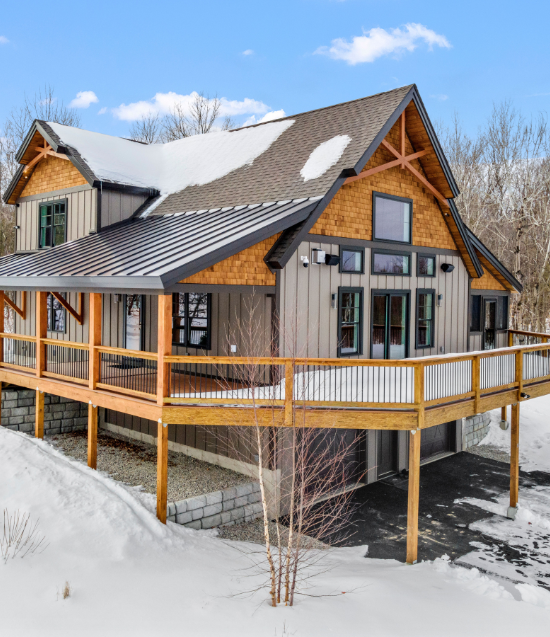
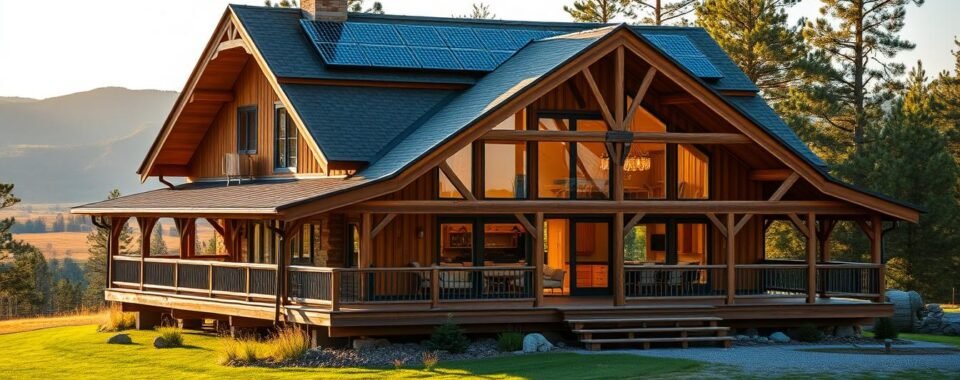
We remember our first time in a steel-framed barndominium at sunrise. The solar panels caught the light, and the air smelled of cedar and sawdust. An open-plan kitchen buzzed with battery-backed appliances.
This moment made the idea of an off the grid home real. It showed us strength, comfort, and a clear link to renewable energy.
An Off Grid Barndominium mixes barn toughness with cozy living spaces. It lets people live without city power, water, and sewer. It uses its own systems for energy and water.
For engineers and students, these homes are like real-life labs. They learn about sustainable living and systems engineering.
We’ve seen builders turn metal or steel shells into green homes. They add solar panels, wind turbines, rain catchers, and composting toilets. People build these homes to save money, reduce their environmental impact, and enjoy privacy.
They also love activities like gardening and raising small animals.
If you’re interested in building one, email info@barndoplans.com or call +1-844-963-9963. We’ll show you how these homes work and how to design one for your sustainable living needs.
What Is an Off-Grid Barndominium?
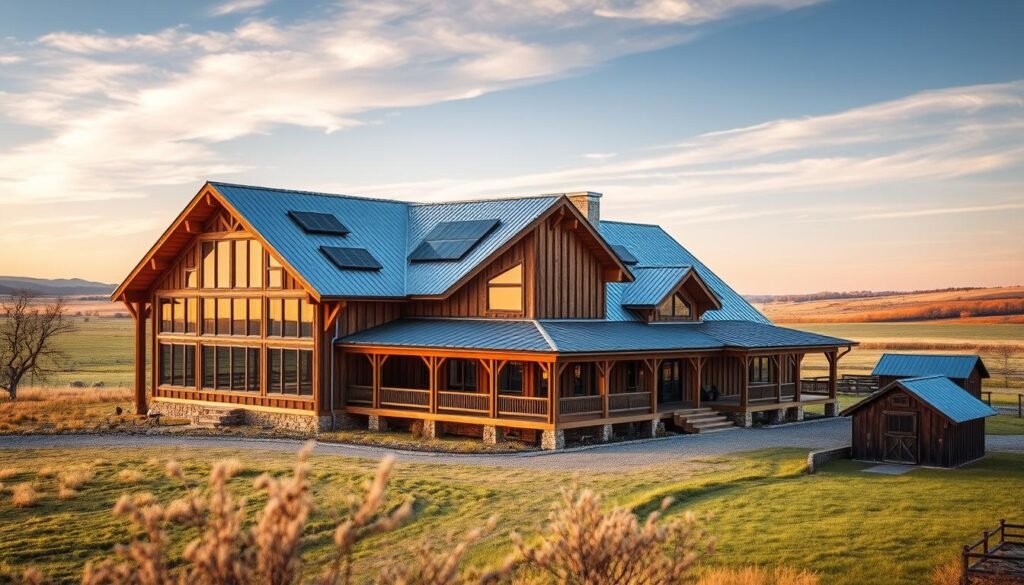
An Off Grid Barndominium is a home that looks like a barn but doesn’t need city utilities. It has its own energy, water, and waste systems. This makes it a great choice for living off the grid in the countryside.
Definition and concept
This type of home makes its own power and treats its own water and waste. It uses solar panels, wind turbines, wells, and rainwater collection. It also has special systems for dealing with wastewater.
Builders use steel frames for strength and to fit in big systems like HVAC and batteries. This makes the home efficient and easy to use.
Designs are based on local resources like sunlight and water. This planning makes the home strong and ready for long-term living off the grid.
History and popularity
Barndominiums became popular for being affordable and quick to build. They have open spaces that fit modern living needs. After 2020, more people wanted homes away from cities.
Now, about 180,000 American homes are off the grid and growing. This shows a big interest in homes that are tough, energy-saving, and good for the environment.
| Core System | Typical Components | Why It Suits a Barndominium |
|---|---|---|
| Power | Photovoltaic panels, MPPT inverters, lithium or lead-acid batteries, generator backup | Roof and yard space allow large arrays; open interiors simplify distribution and future upgrades |
| Water | Well pumps, rainwater harvesting, multi-stage filtration, UV treatment | Rural sites often supply wells; metal roofs are ideal for rain capture for a self-sufficient living cycle |
| Waste | Septic systems, aerobic treatment, composting toilets, greywater recycling | Flexible layouts help place tanks and treatment equipment away from living areas and water sources |
| Structural | Steel frame, metal roof, insulated panels, concrete slab or pier foundations | Durable materials lower maintenance and speed build time for a cost-effective rural retreat |
Benefits of Off-Grid Living
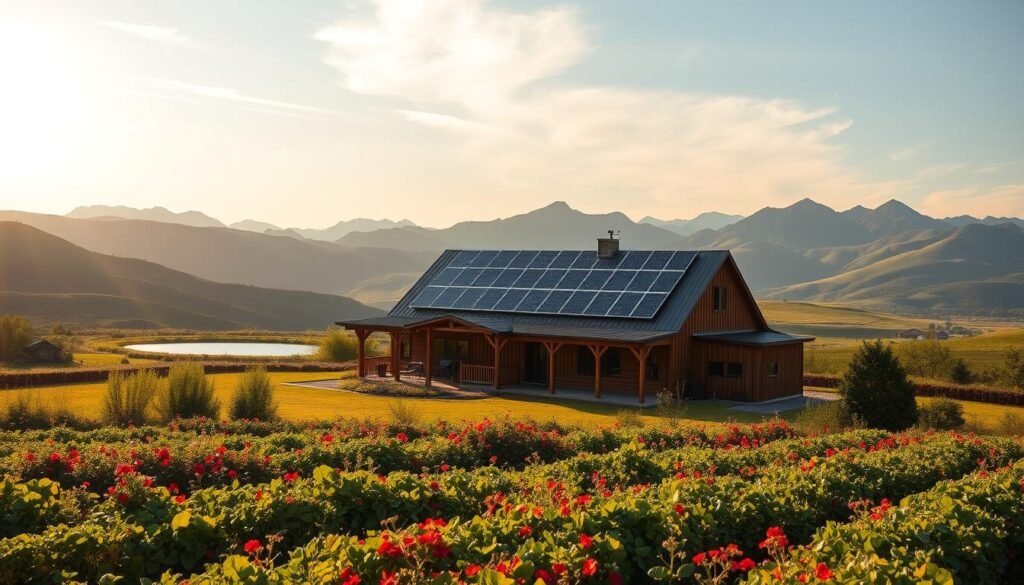
Off-grid living attracts engineers, students, and educators who love practical sustainability. It lets them build homes that don’t rely on the grid. This encourages self-reliance and teaches them to maintain their homes well.
Environmental Advantages
Switching to renewable energy like solar, wind, or micro-hydro reduces fossil fuel use. Eco-friendly homes use greywater, composting toilets, and local food. This cuts down on waste and energy needed to build.
Minimalist living and eating locally also lowers carbon emissions. For example, a 1,500 sq ft off-grid barndominium has solar, rainwater, and composting. You can see it here.
Economic Savings
Starting with renewables and water systems can be expensive. But, you save money in the long run by not paying for utilities and needing less maintenance.
Barndominiums use steel and metal, which are cheaper to build and maintain. They can be built quickly, saving on financing and getting you in sooner.
Independence and Privacy
Off-grid homes offer freedom from power outages and service issues. They’re often in rural areas, providing privacy and a quiet place to work or study.
But, you need to plan for emergencies and low-energy seasons. A good off-grid home balances freedom with being able to handle challenges.
Key Features of Barndominiums
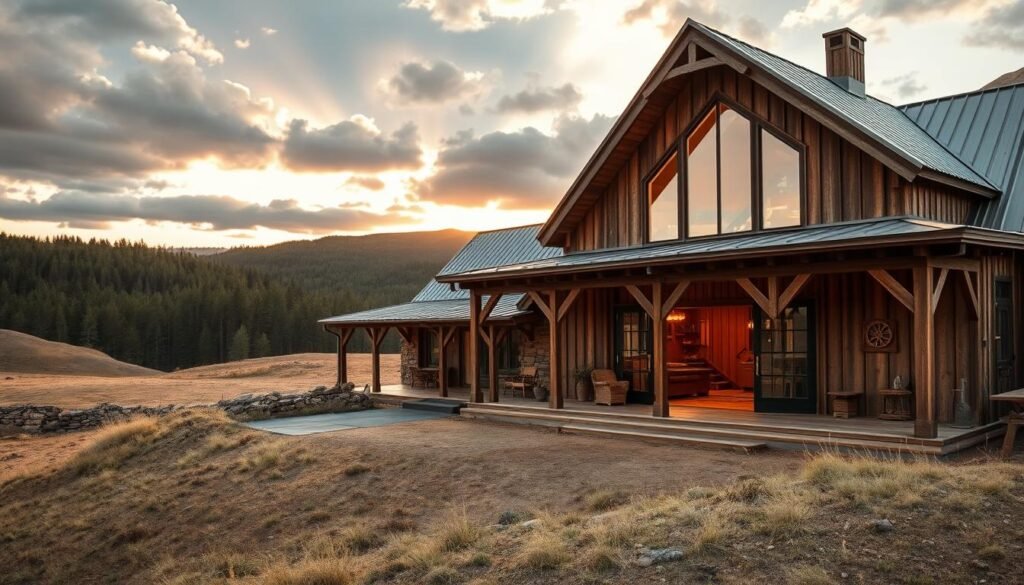
We look at what makes a barndominium a great choice for a rural retreat. It’s all about open plans, tough materials, and living off the grid. These features help keep costs down and make it eco-friendly.
Design flexibility is key: wide spaces let us arrange rooms, workshops, or storage easily. This setup works for families and hobby farms. It also makes it simpler to install utilities.
Big spaces are perfect for farming needs: greenhouses, sheds, or living areas. This flexibility helps save energy by centralizing systems for better maintenance and use.
Durable construction materials make it strong. Steel and metal resist pests, rot, and fire better than wood. Metal roofs also reflect sunlight, saving on cooling costs in summer.
Less upkeep means lower costs over time. The materials chosen are good for the planet and last long, making it a solid choice for a rural home.
Energy-efficient systems are part of the package: top-notch insulation, LED lights, and smart appliances. South-facing windows capture sunlight in winter, and reflective roofs keep it cool in summer.
For off-grid living, we use solar panels, inverters, and batteries. In good locations, we add micro-hydro or wind turbines. We size them right to handle seasonal changes, ensuring reliable power all year.
Essential Off-Grid Utilities
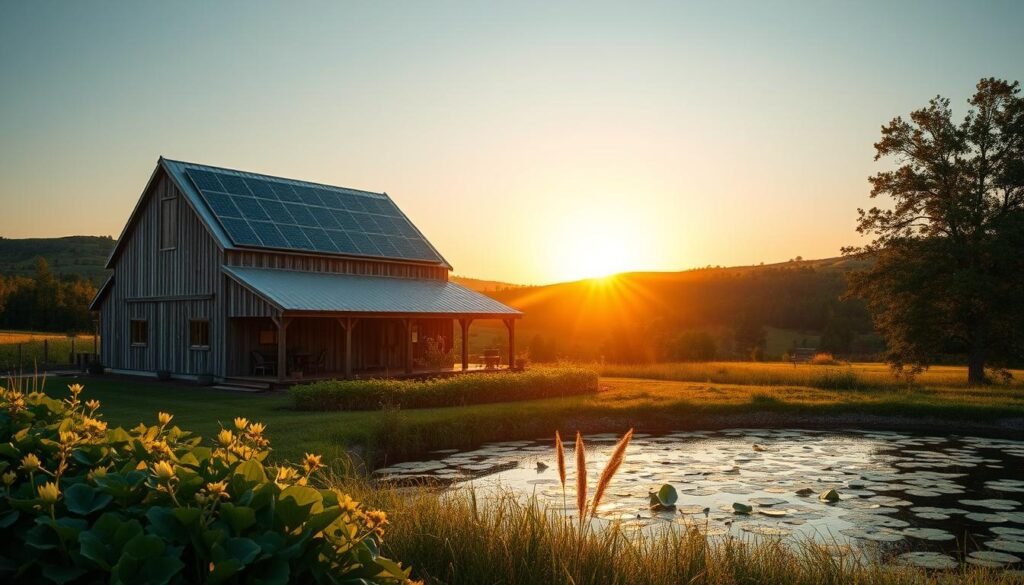
We design utility systems for Off Grid Barndominiums to work like modern homes but stay independent. We plan power, water, and waste systems together. This ensures an off the grid home is comfortable and resilient. Below, we outline practical options and key figures to guide decisions for self-sufficient living.
Solar Power Systems
Solar PV is the main energy source for most off the grid homes. Solar panels, MPPT charge controllers, inverters, and battery banks need to match the expected loads. A basic setup starts at about $1,000; a whole-home setup needs more panels and storage for nights and cloudy days.
Hybrid strategies are recommended: adding a small wind turbine or micro-hydro generator stabilizes supply. Check local solar permitting zones and interconnection rules early to avoid delays.
Water Capture and Filtration
Water options depend on site conditions: drilling a well costs $1,500–$15,000 based on depth. Rainwater harvesting is cheaper when rainfall is reliable. Surface water can work if treated properly.
For safe drinking water, multi-stage filtration plus UV or chlorination is used. Pressure tanks and reliable pumps keep water flowing. We suggest mapping water capture points and testing quality during site selection for long-term self-sufficient living.
Waste Management Solutions
Waste systems range from composting toilets to full septic fields. Small households might use a composting toilet with greywater treatment for landscaping. Larger households need a permitted septic system for durability and code compliance.
Greywater systems reuse sink and shower water for nonpotable uses, reducing captured water demand. Septic system installations require permits and can cost several thousand dollars; plan your budget carefully.
| Utility | Typical Components | Estimated Cost Range (US) | Best Use Case |
|---|---|---|---|
| Solar Power | Solar panels, MPPT controller, inverter, battery bank | $5,000 – $50,000 | Primary power for off the grid home; scalable for larger loads |
| Hybrid Generation | Solar panels + wind turbine or micro-hydro | $8,000 – $60,000 | Sites with variable sun or available water flow |
| Well | Drill, pump, pressure tank, basic filtration | $1,500 – $15,000 | Reliable groundwater; long-term potable supply |
| Rainwater Harvest | Catchment, storage tanks, pre-filters, UV/chlorine treatment | $1,000 – $10,000 | Areas with consistent rainfall; integrates with water capture planning |
| Greywater System | Filtration, distribution lines, treatment bed | $1,000 – $8,000 | Reusing sink and shower water for irrigation |
| Septic System | Tank, leach field, permits, soil testing | $3,000 – $20,000+ | Permanent households requiring code-compliant blackwater handling |
| Composting Toilet | Self-contained units or centralized composting vault | $500 – $5,000 | Small households; low-water or waterless waste solution |
Choosing the Right Location
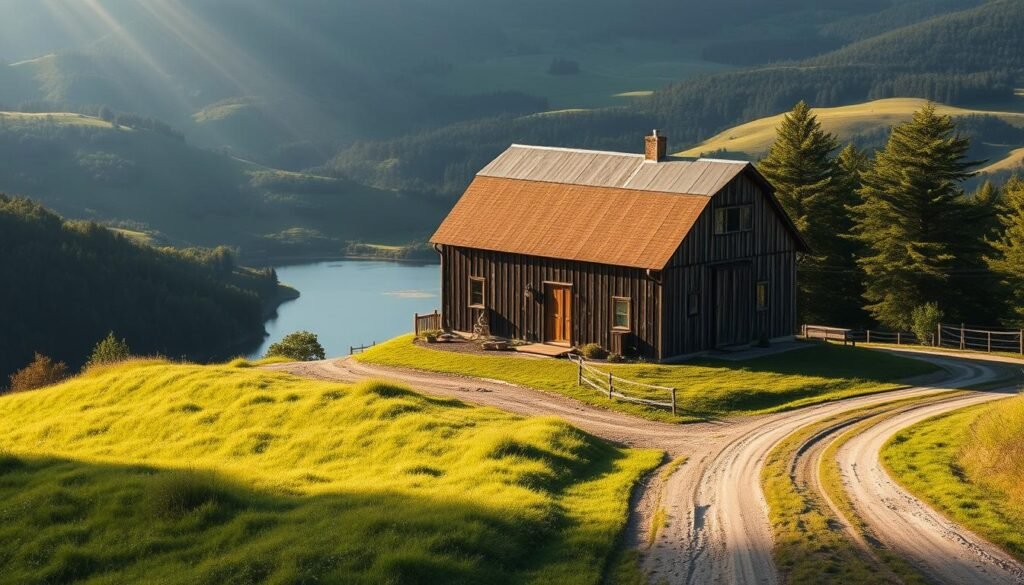
Choosing the right location is key. It sets the stage for every system and lifestyle choice. An Off Grid Barndominium on the right land saves money, speeds up permits, and boosts resilience. Here are key things to consider when picking land for a rural retreat or off the grid home.
Factors to Consider
Sun exposure is critical. The direction of your roof and shade from trees affect solar panel and hot water system performance. We track sun angles across seasons to size arrays correctly.
Wind patterns are important for turbines or natural ventilation. Open ridgelines can increase wind but also raise structure and garden risks.
Water sources guide well placement and catchment strategies. A nearby stream or pond can help with irrigation. Percolation tests help design septic systems.
Soil type impacts gardens and septic fields. Sandy soils drain well, while clay may need engineered leach fields. A soil test is recommended before buying.
Lot size is important. A minimum of 1.5 acres offers space for a septic field, garden, and privacy. Larger areas can include a greenhouse, workshop, or livestock.
Access is essential. Year-round road access, emergency vehicle reachability, and service proximity affect insurance and resale. We check legal easements and road maintenance duties.
Land Zoning and Regulations
Legal options vary by area, but off-grid living is possible nationwide. Before buying, we check land zoning to ensure residential or agricultural use is allowed. Agricultural zoning can lower property taxes.
Permits are needed for solar arrays, septic systems, and well drilling. We contact county planning offices early to outline permit timelines and required inspections.
Building codes vary by area. Some allow flexible approaches for off-grid homes, while others require conventional tie-ins. We seek local code officers’ guidance and collect written confirmations when possible.
Insurance is part of the feasibility check. Many carriers, like State Farm and Allstate, offer policies for rural retreat properties. We look for insurers with experience covering off-grid risks and document system installations to support claims.
When choosing land, we consider technical data, regulatory clarity, and lifestyle goals. This balanced approach helps turn a parcel into a sustainable home design that meets performance and living expectations.
Building Your Own Barndominium
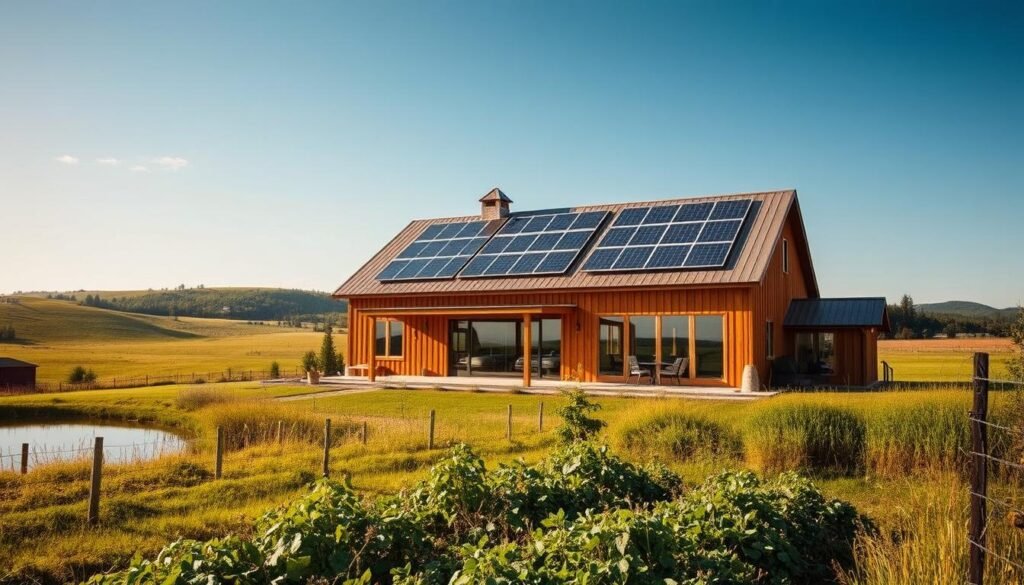
We provide practical steps to turn an Off Grid Barndominium idea into reality. This guide covers design choices, budget, financing, and the DIY vs. professional builder debate.
Finding the Right Plans and Designs
Look for barndominium plans that include space for mechanical systems. This includes battery rooms, inverter placement, rainwater tanks, and septic or composting setups. Choose plans with customization options to save time and money.
Review provider portfolios and sample floor plans. Make sure they meet your needs for roof loads, conduit paths, and equipment access. Plans that integrate service zones can save on retrofit costs and simplify permits.
Budgeting and Financing Options
Start by making a budget that includes land, construction, renewable energy, water systems, and a contingency line. Costs vary by location but often include land, PV and battery arrays, wells, septic or greywater systems, and finish-level choices.
Barndominiums are often cheaper per square foot than stick-frame homes. This is due to steel construction and faster timelines. For financing, compare conventional loans with those for alternative or rural builds. Buying an existing Off Grid Barndominium can be a safer option if new construction financing is tough.
DIY vs. Professional Builders
Building yourself can save on labor costs but increases complexity. Off-grid systems require technical knowledge on electrical sizing, plumbing, and permitting. For beginners, consider a hybrid approach: hire pros for high-risk systems and do interior finishes or site prep yourself.
Work with experienced builders or architects for off-grid projects. They ensure code compliance and reliable system integration. Clear contracts and phased milestones help manage scope and costs when mixing DIY and contractor work.
- Key checklist: approved barndominium plans, detailed budget considerations, confirmed financing path, and a vendor list for professional builders.
- Risk management: build contingency funds, permit reviews, and staged inspections to avoid costly rework.
Sustainable Living Practices
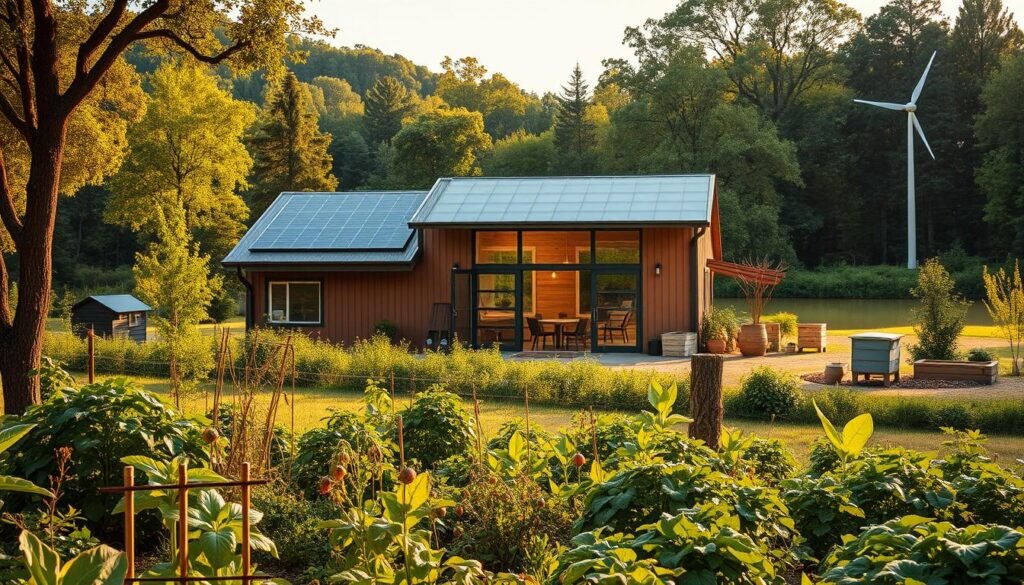
We take steps to make our off the grid home strong and useful. We focus on soil care, food storage, and energy systems. These choices help us save money, feel more comfortable, and live more self-sufficiently.
Organic Gardening
Soil health is key when we plant. We test the soil’s pH, texture, and nutrients to choose the right crops.
We use raised beds and permaculture zones to save water and make planting easier. We grow root veggies, hardy greens, and fruit bushes. These plants are reliable and need little care.
Adding chickens or small animals gives us manure for compost and fresh eggs or milk. This cycle helps our garden grow strong and fertile over time.
Off-Grid Food Preservation
Preserving food helps us enjoy our harvest longer and reduces our need for outside supplies. We use canning, drying, smoking, and root-cellaring.
Root cellars are great for keeping food cool without electricity. For when we need cold storage, solar fridges work well. They keep food safe without needing the grid.
We also focus on reducing waste. By using the right packaging, labeling, and keeping things organized, we make sure we always have what we need. This makes living off the grid easier all year.
Renewable Energy Integration
Our design matches the energy we make to what we use. We choose efficient appliances, LED lights, and low-power gadgets. This means we need less storage.
We plan our energy use to match when we make it. We do things like water pumping and laundry when the sun is strong. Using smart controllers and monitoring helps us use our energy wisely.
We use a mix of solar, wind, and micro-hydro power. This mix gives us steady energy all year. It makes our off the grid home reliable and efficient.
Community and Lifestyle Aspects
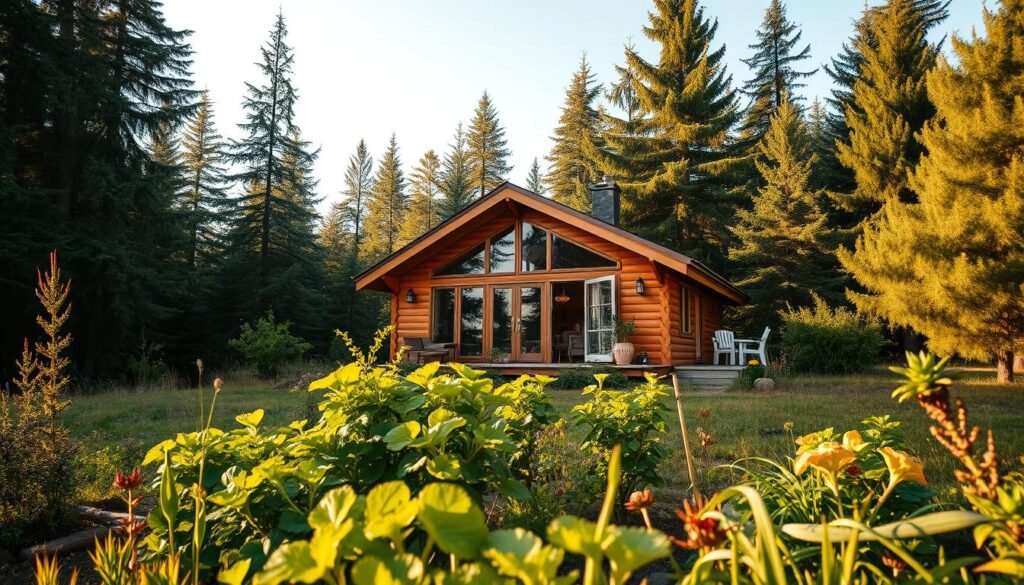
We value the social layer around an off the grid home. It includes practical help, shared skills, and emotional support. Living in a rural retreat doesn’t mean isolation when we connect with active community networks.
Joining off-grid networks is easy. Start by finding online forums, attending local meetups, and visiting nearby projects. These connections help with troubleshooting for solar inverters and more. Check out off-grid tiny barndominiums for ideas and contacts.
Joining Off-Grid Networks
We join forums like Homesteading Today and Reddit homestead communities. We also connect with regional co-ops. Local extension offices and permaculture groups host workshops on renewable systems and organic gardening.
Visiting an established off the grid home offers practical insights. Layout choices and battery bank sizing are clearer in person. Trading labor or tools builds trust and expands our skills.
Social Benefits of Self-Sufficiency
Self-sufficient living boosts well-being through physical activity and fresh food. Our communities are stronger during outages and storms. Neighbors share resources and plans.
Privacy and autonomy are key in rural retreats. Yet, we balance this with communication systems and emergency contacts. Clear plans reduce social isolation while keeping sustainable living benefits.
| Area | Community Value | Practical Example |
|---|---|---|
| Technical Support | Shared expertise on systems and repairs | Peer troubleshooting for solar arrays and inverters |
| Equipment Access | Borrowed or traded tools reduce costs | Shared pressure washers, generators, and saws |
| Skill Building | Workshops and mentorship accelerate learning | Composting, graywater systems, and canning classes |
| Social Resilience | Mutual aid strengthens emergency response | Coordinated plans for storms and medical needs |
| Quality of Life | Health benefits from homegrown food and activity | Community garden exchanges and shared meals |
Future of Off-Grid Barndominiums
Off Grid Barndominium projects are on the rise. People want homes that are resilient, affordable, and easy to maintain. They’re looking for homes that can work on their own but also connect to the grid when needed.
Technological advancements are making this possible. Better battery technology and smart inverters ensure reliable power. Wind and hydro power, along with durable steel frames, are also improving.
Designers and engineers should focus on modular systems. These systems can be upgraded and tailored to each site. It’s important to plan for backup power and remote monitoring from the start.
As the market grows, lenders and insurers will offer better options. Builders will use standard parts, making maintenance easier. This will make Off Grid Barndominiums a more appealing choice for sustainable living.
FAQ
What is an off-grid barndominium?
How did barndominiums become popular for off-grid living?
What environmental benefits do off-grid barndominiums offer?
Are there real economic savings with an off-grid barndominium?
How do off-grid barndominiums support independence and privacy?
What makes barndominiums versatile in design?
Why choose steel and metal materials for an off-grid home?
What energy-efficient systems are typical for off-grid operation?
How do solar power systems for barndominiums work and what do they cost?
What is an off-grid barndominium?
How did barndominiums become popular for off-grid living?
What environmental benefits do off-grid barndominiums offer?
Are there real economic savings with an off-grid barndominium?
How do off-grid barndominiums support independence and privacy?
What makes barndominiums versatile in design?
Why choose steel and metal materials for an off-grid home?
What energy-efficient systems are typical for off-grid operation?
How do solar power systems for barndominiums work and what do they cost?
FAQ
What is an off-grid barndominium?
An off-grid barndominium is a home that uses no public utilities. It’s built with steel or metal and has all the comforts of home. It makes its own electricity, water, and treats its own waste. This makes it a self-sufficient living space.
How did barndominiums become popular for off-grid living?
Barndominiums became popular because they’re easy to build and have lots of space. They’re great for adding green systems. After 2020, more people wanted homes that were good for the planet and could stand on their own.
What environmental benefits do off-grid barndominiums offer?
Off-grid homes use solar, wind, or water power. They also use systems to reuse water and make their own food. This cuts down on waste and helps the planet.
Are there real economic savings with an off-grid barndominium?
Yes, off-grid homes can save money. They cost less to build and need less upkeep. They also save on bills over time. Plus, they might get lower taxes if they’re in a rural area.
How do off-grid barndominiums support independence and privacy?
Off-grid homes give you freedom from the grid. They work well in remote areas. But, you need to plan for power and water needs and have a backup plan.
What makes barndominiums versatile in design?
Barndominiums are flexible because they’re made of steel. This lets you have open spaces and rooms for different uses. You can also add systems like solar panels and water tanks easily.
Why choose steel and metal materials for an off-grid home?
Steel and metal are durable and don’t get damaged by pests or fire. They also last a long time. This is good for homes in remote areas.
What energy-efficient systems are typical for off-grid operation?
Off-grid homes use insulation, smart appliances, and solar power. They also have systems to make and store energy. This helps them use less power.
How do solar power systems for barndominiums work and what do they cost?
Solar systems use panels, controllers, and batteries. They cost around
FAQ
What is an off-grid barndominium?
An off-grid barndominium is a home that uses no public utilities. It’s built with steel or metal and has all the comforts of home. It makes its own electricity, water, and treats its own waste. This makes it a self-sufficient living space.
How did barndominiums become popular for off-grid living?
Barndominiums became popular because they’re easy to build and have lots of space. They’re great for adding green systems. After 2020, more people wanted homes that were good for the planet and could stand on their own.
What environmental benefits do off-grid barndominiums offer?
Off-grid homes use solar, wind, or water power. They also use systems to reuse water and make their own food. This cuts down on waste and helps the planet.
Are there real economic savings with an off-grid barndominium?
Yes, off-grid homes can save money. They cost less to build and need less upkeep. They also save on bills over time. Plus, they might get lower taxes if they’re in a rural area.
How do off-grid barndominiums support independence and privacy?
Off-grid homes give you freedom from the grid. They work well in remote areas. But, you need to plan for power and water needs and have a backup plan.
What makes barndominiums versatile in design?
Barndominiums are flexible because they’re made of steel. This lets you have open spaces and rooms for different uses. You can also add systems like solar panels and water tanks easily.
Why choose steel and metal materials for an off-grid home?
Steel and metal are durable and don’t get damaged by pests or fire. They also last a long time. This is good for homes in remote areas.
What energy-efficient systems are typical for off-grid operation?
Off-grid homes use insulation, smart appliances, and solar power. They also have systems to make and store energy. This helps them use less power.
How do solar power systems for barndominiums work and what do they cost?
Solar systems use panels, controllers, and batteries. They cost around $1,000 for a basic setup. But, a full system for a home is more expensive. You need to check local rules and get help from experts.
What are the main water options for an off-grid barndominium?
You can use wells, surface water, or collect rainwater. You’ll need to treat the water to make it safe. You also need to plan how to distribute it and manage waste.
What wastewater solutions are used off-grid?
You can reuse greywater for plants. Blackwater goes into septic systems or composting toilets. You need to get permits and follow rules for these systems.
How do I choose the right location for an off-grid barndominium?
Look for a place with good sunlight and wind. It should have enough space for your home and other needs. At least 1.5 acres is a good size for privacy and space.
Are off-grid barndominiums legal everywhere?
Off-grid living is legal everywhere, but rules vary. You’ll need permits for things like solar and wells. Check local laws and taxes before you buy land.
How should I find plans and designs for an off-grid barndominium?
Look for plans that include space for systems. You can find stock or custom plans. For help, contact info@barndoplans.com or call +1-844-963-9963.
What are realistic budgeting and financing considerations?
Plan for land, construction, systems, and extras. Land prices vary. Wells, solar, and septic systems are big costs. You can get loans or buy a pre-built home.
Can I build an off-grid barndominium myself?
DIY can save money, but it’s harder. You’ll need experts for things like solar and wells. A mix of DIY and hiring pros might be best.
How can I grow food and manage soil on off-grid land?
Start with soil tests and plan your garden. Use local plants and save water. Small animals can help with waste and food.
What food preservation methods work well off-grid?
Use canning, drying, smoking, and root cellars. These methods don’t need a lot of energy. They help you eat local food year-round.
How should we integrate renewable energy with daily routines?
Match energy use with what you make. Use efficient things and plan when to use power. This helps your systems last longer.
How can we learn from others and find support?
Join online groups and local meetings. Visit off-grid homes for hands-on learning. Networking helps with problems and finding materials.
What social benefits and challenges come with off-grid living?
Off-grid living teaches skills and makes you self-sufficient. It’s good for your health. But, it can be lonely. Plan for staying connected.
What trends and technologies will shape the future of off-grid barndominiums?
Expect more barndominiums and off-grid homes. New tech will make them better. This includes better batteries and easier building.
What practical design principles should engineers and designers apply?
Plan for upgrades and use local resources. Make systems reliable and easy to monitor. Work with local experts to follow rules and make a good home.
Who can I contact for plans or guidance on building an off-grid barndominium?
For plans or help, contact info@barndoplans.com or call +1-844-963-9963. Talk to experts and local authorities to make your home right.
,000 for a basic setup. But, a full system for a home is more expensive. You need to check local rules and get help from experts.
What are the main water options for an off-grid barndominium?
You can use wells, surface water, or collect rainwater. You’ll need to treat the water to make it safe. You also need to plan how to distribute it and manage waste.
What wastewater solutions are used off-grid?
You can reuse greywater for plants. Blackwater goes into septic systems or composting toilets. You need to get permits and follow rules for these systems.
How do I choose the right location for an off-grid barndominium?
Look for a place with good sunlight and wind. It should have enough space for your home and other needs. At least 1.5 acres is a good size for privacy and space.
Are off-grid barndominiums legal everywhere?
Off-grid living is legal everywhere, but rules vary. You’ll need permits for things like solar and wells. Check local laws and taxes before you buy land.
How should I find plans and designs for an off-grid barndominium?
Look for plans that include space for systems. You can find stock or custom plans. For help, contact info@barndoplans.com or call +1-844-963-9963.
What are realistic budgeting and financing considerations?
Plan for land, construction, systems, and extras. Land prices vary. Wells, solar, and septic systems are big costs. You can get loans or buy a pre-built home.
Can I build an off-grid barndominium myself?
DIY can save money, but it’s harder. You’ll need experts for things like solar and wells. A mix of DIY and hiring pros might be best.
How can I grow food and manage soil on off-grid land?
Start with soil tests and plan your garden. Use local plants and save water. Small animals can help with waste and food.
What food preservation methods work well off-grid?
Use canning, drying, smoking, and root cellars. These methods don’t need a lot of energy. They help you eat local food year-round.
How should we integrate renewable energy with daily routines?
Match energy use with what you make. Use efficient things and plan when to use power. This helps your systems last longer.
How can we learn from others and find support?
Join online groups and local meetings. Visit off-grid homes for hands-on learning. Networking helps with problems and finding materials.
What social benefits and challenges come with off-grid living?
Off-grid living teaches skills and makes you self-sufficient. It’s good for your health. But, it can be lonely. Plan for staying connected.
What trends and technologies will shape the future of off-grid barndominiums?
Expect more barndominiums and off-grid homes. New tech will make them better. This includes better batteries and easier building.
What practical design principles should engineers and designers apply?
Plan for upgrades and use local resources. Make systems reliable and easy to monitor. Work with local experts to follow rules and make a good home.
Who can I contact for plans or guidance on building an off-grid barndominium?
For plans or help, contact info@barndoplans.com or call +1-844-963-9963. Talk to experts and local authorities to make your home right.