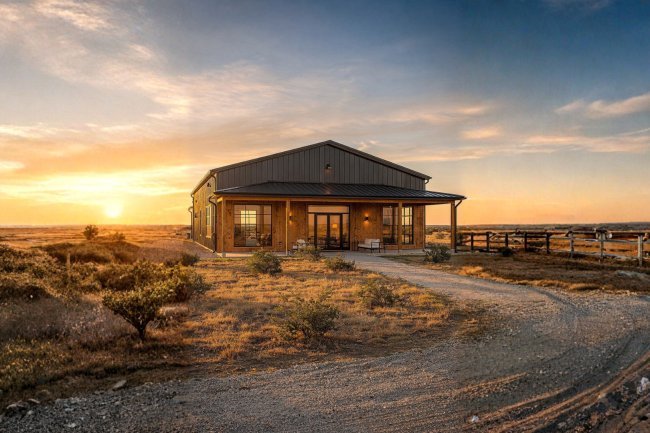
3D Visualization Challenges
The Problem With Flat Floor Plans
Traditional 2D floor plans often fail to communicate how a finished barndominium will actually feel, function, and look in real life.
Why Visualization Becomes Difficult
Most homeowners can read a floor plan — but very few can truly visualize it. Understanding how a 2D drawing translates into a real, livable space requires a level of spatial reasoning that even experienced builders sometimes struggle with.
For barndominium buyers, who are already navigating an unfamiliar building typology, this gap can lead to costly miscommunications, last-minute design changes, and approval delays.
When a family in rural Texas sits down to review their barndo floor plan with a builder, they're essentially being asked to imagine a 2,400-square-foot metal structure from a bird's-eye schematic.
That's a lot to ask — and when assumptions diverge between the homeowner and the contractor, expensive change orders often follow.
Why Miscommunication Matters
Miscommunications between homeowner and builder are one of the top causes of budget overruns and project delays in custom residential construction.
Common Pain Points
These are the most common issues homeowners face when relying only on traditional floor plans during the planning process.
01
Ceiling Height Confusion
Many buyers struggle to understand how tall ceilings, lofts, and open-concept spaces will actually feel once built.
02
Exterior Design Uncertainty
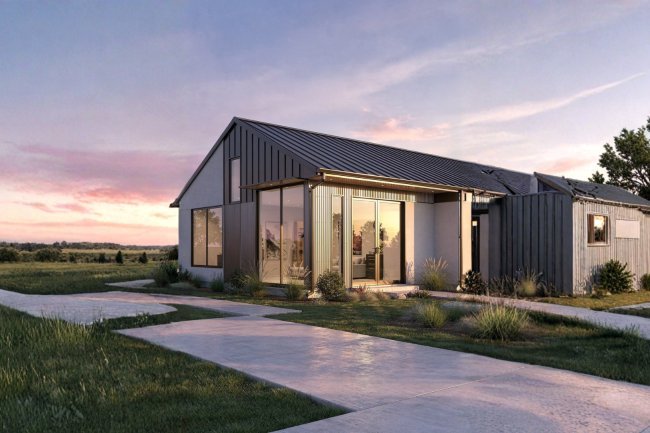
Flat drawings rarely communicate exterior curb appeal, roof proportions, siding combinations, or overall architectural character.
03
Builder & Owner Misalignment
Different interpretations of the same floor plan often create conflicting expectations between the homeowner and contractor.
04
Permit & Approval Delays
Incomplete or unclear visual documentation can lead to permit revisions, review delays, and additional approval requirements.
05
Late-Stage Design Changes
When homeowners finally understand the design during construction, expensive modifications and change orders often follow.
3D Rendering Benefits
What 3D Renderings Actually Do for Barndominium Planning
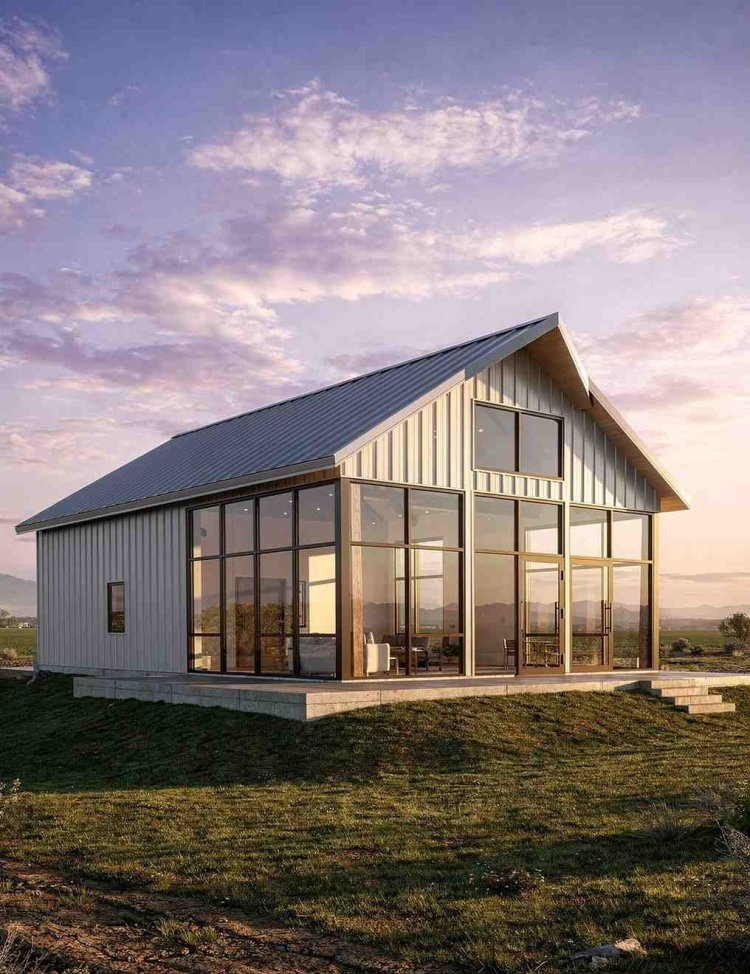
3D renderings transform traditional floor plans into immersive visual models that help homeowners, builders, and permit reviewers make smarter decisions before construction begins.
Why 3D Visualization Matters
A high-quality 3D rendering converts your floor plan into a photorealistic or semi-realistic digital model — showing everything from roofline pitch and window placement to interior finishes and natural light behavior.
For barndominium planning specifically, this is transformative.
01
Visualize Before You Build
See your barndo from every angle — interior, exterior, and aerial — before a single post is set. Spot design issues early, when changes are easy and inexpensive.
02
Align With Your Builder
Renderings give your general contractor a shared visual reference. Everyone works from the same picture, reducing ambiguity in scope-of-work conversations.
03
Accelerate Permit Approvals
Many county planning offices and HOAs respond faster and more favorably when visual documentation accompanies permit applications. Renderings demonstrate intent clearly.
04
Make Confident Decisions
From exterior siding color to window groupings and porch depth, 3D renderings let homeowners test ideas visually before committing to materials or structural changes.
Permit Approval & 3D Renderings
3D Renderings and the Permit Approval Process
Professional renderings help planning departments, inspectors, and HOA review boards clearly understand your barndominium project before construction begins.
Why Visuals Matter to Local Authorities
Across the United States, county building departments and zoning boards vary widely in their documentation requirements.
In rural counties — where many barndominiums are built — planning officials may be reviewing a metal building home for the first time.
A clear 3D rendering helps them understand the project's residential intent and aesthetic context, significantly reducing back-and-forth.
In states like Texas, Oklahoma, Tennessee, and the Carolinas, where barndominium construction has surged, local permit offices are becoming more familiar with these structures.
HOA and Neighborhood Review Boards
If your land sits within a community governed by a homeowners association, architectural review committees (ARCs) almost always require visual submissions.
Submitting a professional 3D rendering alongside your elevation drawings dramatically improves your chances of fast-track approval.
Renderings also help you demonstrate compliance with neighborhood aesthetic guidelines — showing that your barndo will blend with surrounding properties rather than clash with them.
Detailed visual presentations reduce uncertainty for review boards and streamline the overall approval process.
Fewer Revision Requests
Builders report that permit applications accompanied by professional 3D renderings see significantly fewer revision requests from planning departments.
Why Context Speeds Approvals
A rendering that clearly shows rooflines, setbacks, exterior finishes, and overall structure proportions gives inspectors and planners the context they need to approve projects more efficiently.
When officials can immediately understand the project's appearance and intent, the approval process becomes smoother for everyone involved.
Builder Communication
Builder Communication:
The Real Game Changer
Perhaps the most underappreciated benefit of 3D renderings is how dramatically they improve communication between homeowners and their building teams. A rendering is a universal language — it transcends technical literacy and speaks directly to intent.
01
Subcontractor Coordination
When your general contractor shares a rendered model with electricians, framers, and HVAC subs, each trade understands the spatial context of their work.
This reduces conflicts during rough-in phases — a common source of delays in barndominium builds where open-concept layouts require precise mechanical placement.
02
Change Order Reduction
According to construction industry data, a significant share of residential change orders originate from design misunderstandings — not structural necessity.
When homeowners review a photorealistic rendering and sign off, they're far less likely to request mid-build changes to window sizes, ceiling heights, or room configurations.
03
Scope-of-Work Clarity
A detailed rendering helps builders write tighter bids. When the visual scope is clear, contractors can price more accurately.
Homeowners face fewer surprise line items, and the project timeline becomes more predictable for all parties involved.
Interior 3D Visualization
Interior Renderings: Designing Your Barndo From the Inside Out
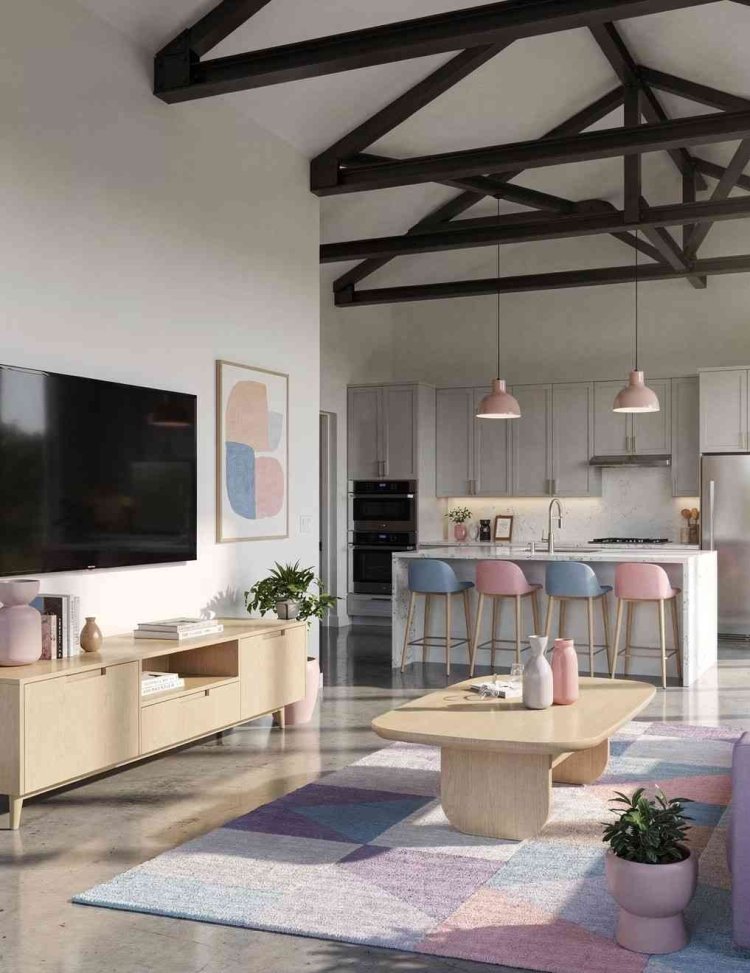
Exterior renderings get most of the attention, but interior 3D visualizations are equally — if not more — valuable for barndominium planning. Barndos are celebrated for their dramatic open-concept interiors, soaring ceilings, exposed steel beams, and flexible living areas. These are features that are nearly impossible to appreciate from a 2D floor plan alone.
An interior rendering allows homeowners to:
- Evaluate furniture scale against ceiling height
- Test natural light behavior from clerestory windows
- Visualize kitchen island placement in great rooms
- Confirm that bedroom privacy is maintained in open layouts
- Explore finish options like shiplap, concrete floors, and wood beams
Teams like those at Barndo Plans understand that interior flow is as important as exterior curb appeal when designing barndominium floor plans for real families.
Rendering Best Practices
Practical Tips: Getting the Most From Your Barndo Rendering
Not all 3D renderings are created equal. To maximize the value of this tool in your planning process, follow these practical guidelines before and during the rendering phase.
01
Start With a Finalized Floor Plan
Renderings are only as accurate as the underlying plan. Invest time upfront in selecting a well-designed barndominium floor plan — or customizing one — before moving to the rendering stage. Resources like Barndo Plans offer professionally drawn plans built specifically for US construction standards.
02
Collect Inspiration References
Gather photos of exteriors, rooflines, window styles, and interior finishes that resonate with your vision. Share these with your designer or rendering team so the output closely reflects your aesthetic preferences.
03
Include Site Context When Possible
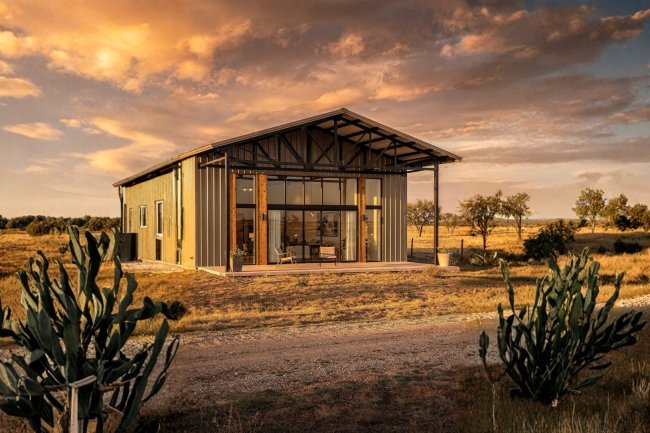
If your land has distinct features — a tree line, a pond, a hillside — ask your rendering team to incorporate topographical context. A rendering placed within its actual setting is far more persuasive for permit boards and HOA reviews.
04
Request Multiple Angles
A single front-elevation rendering isn't enough. Request views from multiple angles — rear, side, aerial, and interior key rooms. Each angle reveals different potential issues and gives builders a complete visual reference.
US Barndominium Trends
Barndominium Planning in the US: A Rapidly Evolving Landscape
01
Zoning and Regulatory Shifts
As barndominium homes gain mainstream traction across the US — particularly in states like Texas, Oklahoma, Missouri, Georgia, and the Carolinas — local zoning codes are slowly adapting. Many rural counties now have clearer pathways for permitting metal-frame residential structures.
However, the documentation bar is rising in parallel. Municipalities that once accepted hand-drawn sketches are now requesting digital elevation drawings, material specifications, and in some jurisdictions, full 3D visualizations as part of the preliminary review package.
Being prepared with professional-quality renderings positions your project ahead of the curve and improves approval readiness.
02
Lender and Appraiser Considerations
If you're financing your barndominium build through a construction loan or USDA rural development program, lenders and appraisers often need to evaluate the proposed structure carefully before approving financing.
A compelling 3D rendering — paired with stamped engineered drawings — helps appraisers establish comparable value and gives lenders the confidence to approve construction financing.
Financing Insight
USDA and FHA construction loan programs increasingly serve barndominium buyers in rural US counties, making professional documentation a critical part of the financing package.
Barndo Plans Advantage
How Barndo Plans Supports Your Vision
When you're planning a barndominium, the quality of your floor plan is the foundation that everything else — including renderings — is built upon. Barndo Plans offers a curated library of professionally designed barndominium floor plans built specifically for US construction standards, rural lot configurations, and the lifestyle needs of modern American families.
01
Professionally Drawn Plans
Every plan is drafted to US residential building standards, making them ready for builder review, permit submission, and engineering stamps in most states.
02
Rendering-Ready Designs
Clean, detailed floor plans and elevation drawings provide the accurate foundation that rendering teams need to produce high-quality 3D visuals efficiently.
03
Diverse Style Options
From compact 1,200 sq ft starter barndos to sprawling 4,000+ sq ft multi-family layouts, Barndo Plans offers designs that reflect the full range of American barndominium living.
Final Planning Insight
Final Thoughts: Invest in Visualization Early
Building a barndominium is one of the most significant investments a US homeowner will make. It's a decision that shapes daily life for decades — and it deserves the best possible planning tools from day one.
3D renderings aren't a luxury reserved for custom home builders with unlimited budgets. They're a practical, increasingly accessible tool that pays dividends in faster approvals, fewer change orders, cleaner builder communication, and — perhaps most importantly — the peace of mind that comes from knowing exactly what you're building before the first beam goes up.
If you're in the early stages of barndominium planning, start by exploring the professionally designed floor plans at Barndo Plans (barndoplans.com). A great plan is the first step toward a great rendering — and a great home.
The earlier you invest in quality visuals, the more control you have over your project's outcome — and the smoother every conversation with builders, planners, and lenders becomes.
Key Takeaways
- 3D renderings bridge the gap between flat plans and real-world results
- Visual documentation accelerates permit approvals across US counties
- Builder communication improves dramatically with shared visual references
- Interior renderings are just as valuable as exterior views
- A quality floor plan is the foundation of an effective rendering
- Early investment in visuals reduces costly late-stage changes