The 4 Biggest Cost Drivers
Budget Planning Guide
Understand What Really Impacts Your Build Cost
Most barndominium pricing changes can be traced back to a handful of key decisions. Understanding these factors before selecting land, finalizing a floor plan, or requesting bids can help prevent budget surprises and keep your project financially on track.
1
Size
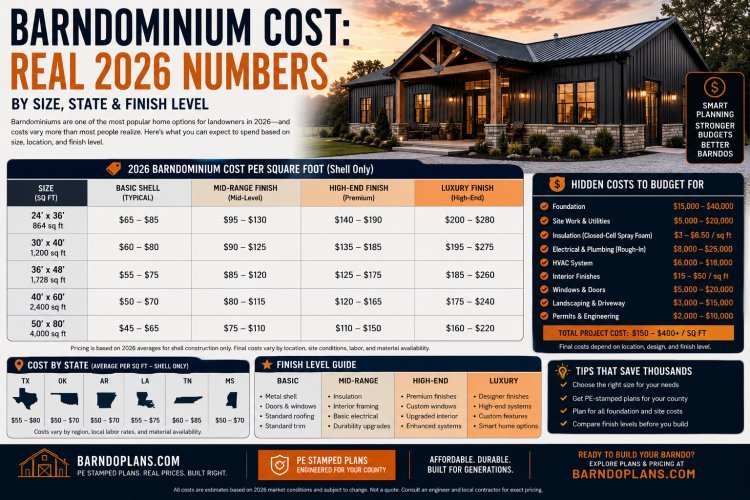
Square footage remains the most influential cost variable and the one homeowners control most directly. As a general planning rule, every additional 200 square feet may add roughly $15,000–$30,000 depending on finishes, complexity, and location. Carefully right-sizing your floor plan is often the most effective way to manage construction costs.
2
Finish Level
The largest difference between standard and premium homes is usually found inside the structure. Cabinetry, countertops, flooring, lighting, plumbing fixtures, trim packages, and custom finishes can significantly impact total project cost even when the structural shell remains identical.
3
Site Conditions
Land conditions can have a major effect on project budgets. Rocky terrain, poor soil conditions, flood-zone requirements, steep slopes, or remote utility access can add $20,000–$60,000+ before framing begins. Soil testing, utility verification, and flood-zone research should be completed before purchasing property whenever possible.
4
Builder vs. Owner-Builder
Acting as your own general contractor can potentially reduce costs by 15–25%, but it also requires substantial time, scheduling coordination, contractor management, procurement oversight, and problem-solving throughout the build. For primary residences, many homeowners choose a professional general contractor to manage the process.
The Best Ways to Control Costs
Right-Size the Floor Plan Research Land Carefully Phase Future Upgrades Verify Utilities Early Compare Builder Quotes
Smart Planning Saves More Than Smart Shopping
Most budget overruns don't come from material prices—they come from choosing the wrong size, overlooking site challenges, or making major design changes late in the project. By focusing on these four cost drivers early, homeowners can build more efficiently while maintaining quality, comfort, and long-term value.
Hidden Costs Most Barndo Budgets Miss
+
Budget for the Whole Site
Rural barndominium builds often run over budget because the quote covers the shell, but not the site work, utilities, or foundation challenges that make the home usable.
Well and Septic
Expect about $16,000 to $32,000 on rural sites, and this is almost never included in a per-square-foot quote.
Electrical Service Drop
If power is not nearby, a service drop from the nearest pole can add roughly $3,000 to $15,000+.
Clearing and Grading
Beyond a flat pad, land clearing and grading can range from $4,000 to $20,000 depending on terrain and vegetation.
Soil and Foundation
Problem soils can require $8,000 to $25,000 more than a basic slab for testing and engineered foundation changes.
Driveway or Access Road
A long or rough access route can add about $5,000 to $25,000 depending on terrain and distance.
Contingency
Budget 15% instead of 10% for rural builds, especially when well and septic are involved.
Rural Sites Need a Bigger Buffer
Rural builds with well and septic consistently see more surprise costs than suburban or infill projects, so the safest budget assumes more site complexity up front.
Quote the Shell, Then Add the Site
The most accurate barndominium budget starts with the building package and then layers in utilities, grading, foundation, and access costs separately.
Frequently Asked Questions
Cost & Budget Questions
Understanding Real-World Barndominium Costs
Barndominium pricing is one of the most researched topics among prospective homeowners. Understanding what drives costs, what is included in estimates, and how different construction approaches affect budgets can help you plan a more predictable and successful build.
Average Cost
What Is the Average Cost to Build a Barndominium?
In many Texas and Oklahoma markets, a fully finished barndominium commonly falls within the range of $140–$165 per square foot for a standard build. A 2,400-square-foot project typically lands between $200,000 and $380,000, excluding land costs.
Cost Estimates
Why Do Online Cost Estimates Vary So Much?
Many published estimates exclude major expenses such as septic systems, wells, land clearing, utility connections, driveways, engineering, or permitting costs. Always compare estimates based on exactly what is included—not just the final number.
Barndominium vs Traditional Home
20–35%
Typical Cost Savings
VS
COST COMPARISON
Is It Cheaper to Build a Barndominium?
In many situations, yes. Barndominiums are often 20–35% less expensive per square foot compared to similarly finished traditional homes. Structural efficiency, reduced framing complexity, and shorter construction schedules are key reasons for the savings.
What Is the Cheapest Barndominium You Can Build?
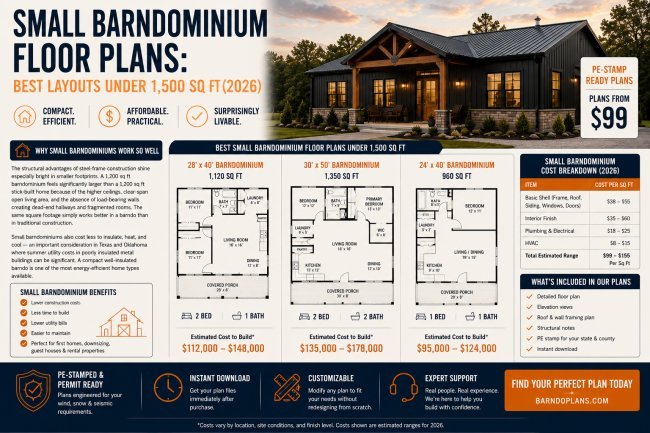
An experienced owner-builder working in areas such as East Texas or Central Oklahoma may complete a 1,200-square-foot barndominium for roughly $110,000–$160,000 including well and septic systems. Achieving costs at this level typically requires direct project management and significant owner involvement throughout construction.
Verify What's Included Compare Total Build Costs Site Conditions Matter Owner-Build Can Reduce Costs Budget for Utilities & Permits
Use the free calculator to estimate your build cost, then pair it with PE-stamped plans to keep your project moving toward permit submission.
Estimate Cost
Start with a rough budget estimate at Barndoplans.com to see how size, finish level, and site conditions affect your total build cost.
PE-Stamped Plans
Get PE-stamped plans from $99 through the Barndoplans.com plans page, with engineering support available for permit-ready submissions.
Ray Rau, PE
Ray Rau is a licensed Professional Engineer with 18+ years of barndominium design and engineering experience, serving as the engineering partner at Barndoplans.com.