Foundation Foundations: Building Your Barndominium Regionally
Choose the right barndominium foundation by region. Compare slab, crawl space, basement, and pier-and-beam options for lasting performance.
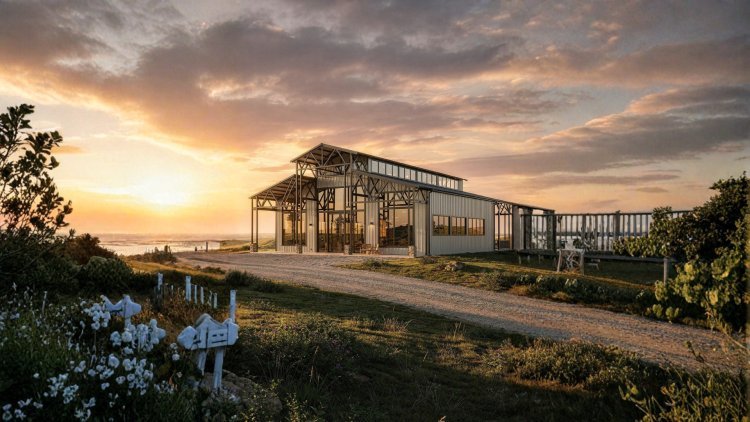
The Monolithic Slab: The Industry Standard
The monolithic slab is the most widely used foundation type for barndominiums across the United States. When site conditions are favorable, it provides a cost-effective, structurally sound foundation that can be poured quickly and built upon without delay.
Key Considerations
Where a monolithic slab would crack, heave, or sit too shallow to survive harsh winters, stem wall and crawl space foundations become the structurally superior solution. By extending footings below the frost line and elevating the finished floor, this system delivers flexibility, durability, and long-term serviceability.
Hill Country Texas, the Ozarks, Appalachian foothills, and rolling Southeastern landscapes often make slab construction costly due to extensive grading requirements. Stem walls can step down the terrain naturally, reducing excavation costs and preserving the site's original contours.
FEMA flood zones frequently require homes to sit above Base Flood Elevation (BFE). Stem wall systems offer an efficient method for raising structures 12–48 inches without the expense of a full basement, making them especially valuable along the Gulf Coast, Mississippi River corridor, and Atlantic coastal regions.
Crawl spaces must be properly vented or encapsulated with a high-quality vapor barrier to prevent moisture accumulation, mold growth, and structural deterioration. In humid Southern climates, a conditioned crawl space — sealed and climate-controlled — often delivers superior long-term performance compared to traditional vented systems.
Crawl Space & Stem Walls: The Regional Fix
Sloped & Uneven Terrain
Flood Zone Advantages
Moisture Management Is Critical
A full basement is the most substantial — and most expensive — foundation investment available for a barndominium. While excavation, waterproofing, drainage systems, and structural floor assemblies add significant upfront cost, the long-term benefits can be extraordinary when the site and climate are appropriate.
Across Kansas, Nebraska, Iowa, Missouri, South Dakota, and northern Oklahoma, a basement is often considered a life-safety necessity rather than a luxury. FEMA guidance consistently favors below-grade shelter as the most reliable protection during severe tornado events. For barndominiums located in high-risk wind regions, a basement or storm shelter provides meaningful protection against powerful EF3+ tornadoes.
Typical additional cost compared to a monolithic slab foundation of the same footprint.
Earth-sheltered walls maintain stable temperatures throughout the year, helping reduce heating and cooling costs in regions with significant seasonal extremes.
Finished basements can provide guest suites, entertainment rooms, home gyms, offices, or rental accommodations at a lower cost per square foot than above-grade additions.
Mechanical rooms, root cellars, hobby spaces, workshops, and long-term storage all fit naturally within a basement layout.
Basement foundations naturally extend below frost depth requirements, simplifying code compliance in northern climates.
Basements: The Strategic Upgrade
Tornado Alley Protection
Why Homeowners Choose Basements
Thermal & Energy Benefits
Extra Living Space
Storage & Workshop Potential
Frost-Line Compliance
No foundation decision should be made without a professional geotechnical investigation of your specific site. Regional generalizations are a useful starting point, but the soil beneath your exact parcel determines everything. Two nearby properties can have dramatically different soil profiles — one suitable for a simple slab, the other requiring engineered solutions.
Common throughout North and Central Texas, Oklahoma, Colorado's Front Range, and parts of the Southeast. These soils shrink during drought and swell dramatically when wet, creating powerful uplift forces that can exceed 10,000 lbs per sq ft.
Frequently found in the Texas Hill Country, Ozark Plateau, and Rocky Mountain foothills. Shallow bedrock may reduce excavation costs, but deeper rock layers can require expensive cutting or blasting. Karst limestone terrain demands specialized engineering.
Found throughout Minnesota, the Dakotas, the Northern Rockies, and other cold-climate regions. Ice lenses forming beneath the surface create frost heave that can crack foundations, walls, and floors if footings are not placed below frost depth.
Site Intelligence: Soil and Climate Rules
Expansive Clay Soils
Rocky & Limestone Substrates
Frost-Susceptible Soils
There is no universally correct barndominium foundation. The right choice emerges from the intersection of your land, climate, local building codes, budget, and long-term lifestyle goals. What works perfectly in Texas may fail in Minnesota. Smart foundation decisions are based on engineering, not assumptions.
Your foundation should be designed and stamped by a licensed Professional Engineer (PE) in your state. Engineers translate soil data into site-specific footing dimensions, reinforcement schedules, and concrete specifications that satisfy code requirements and long-term performance goals.
Foundation upgrades often represent a small fraction of total project cost. Investing an additional $5,000–$15,000 in the correct foundation system can prevent tens or even hundreds of thousands of dollars in future structural repairs caused by settlement, cracking, or moisture intrusion.
The Final Decision: Engineering Over Assumption
Engage a State-Certified Structural Engineer
Budget for the Right Base
Regional Foundation Recommendations
What's Your Reaction?