How to Maximize Natural Ventilation in Your Barndo Design
Maximize natural ventilation in your barndominium with smart design tips to improve airflow, comfort, energy efficiency, and year-round performance.
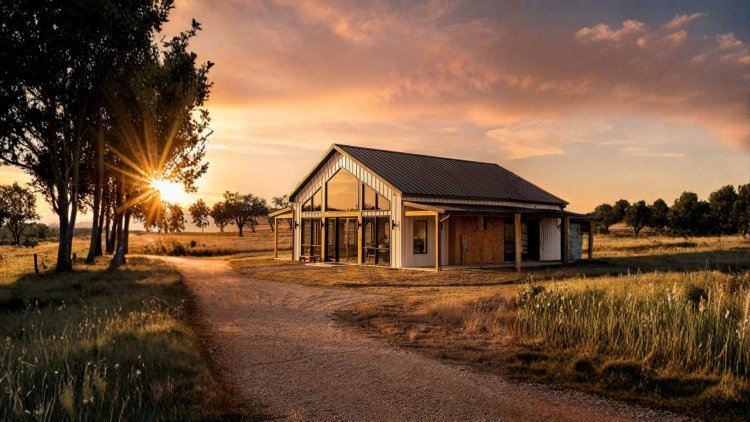
Why Natural Ventilation Matters in Barndominium Design
Barndominiums typically feature large open interiors — often 1,500 to 3,500+ sq ft of unobstructed space — with metal roofing and walls that conduct heat far more aggressively than traditional wood-frame construction. Without intentional airflow design, summer heat accumulates quickly, especially in Southern and Midwestern states where most barndos are built.
Free Performance Built Into Your Floor Plan
Natural ventilation reduces dependence on mechanical HVAC, lowers utility costs, and improves indoor air quality — all without adding complexity to the build. When it's integrated at the floor plan stage, it's essentially free performance. When it's ignored, you're retrofitting solutions that never work quite as effectively.
Top Ventilation Pain Points
According to the U.S. Department of Energy, strategic natural ventilation can reduce cooling loads by up to 30% in mixed-climate zones — a major advantage for large barndominium footprints where cooling costs can otherwise climb rapidly.
Smart ventilation starts with the floor plan. These proven design approaches help barndominium owners improve airflow, reduce cooling loads, and create healthier, more comfortable living spaces.
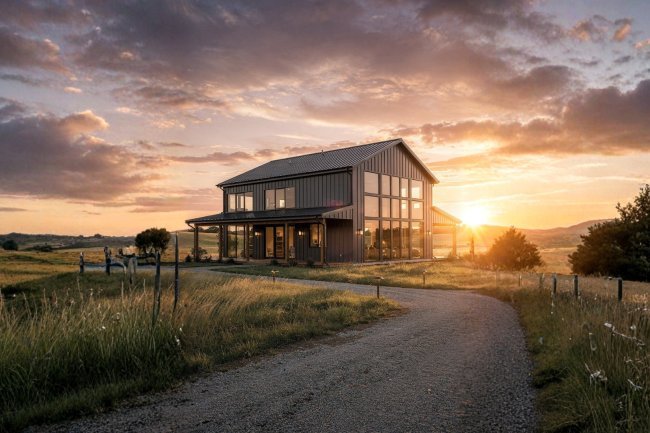
The tall rooflines common in barndominiums are ideal for passive cooling. Clerestory windows near the roof peak allow hot air to escape, while ridge and soffit vents create continuous airflow through the roof assembly.
Warm air naturally rises. By combining lower-level openings with upper-level exhaust points, tall barndo spaces become natural airflow chimneys. This strategy works exceptionally well in homes with lofts, cathedral ceilings, and open great rooms.
Core Design Strategies for Natural Airflow
Clerestory Windows & Ridge Vents
Design for Stack Effect
Natural ventilation isn't just about windows — it's baked into your floor plan from day one. Room layout, building orientation, and transitional spaces all determine how effectively air moves through your barndominium.
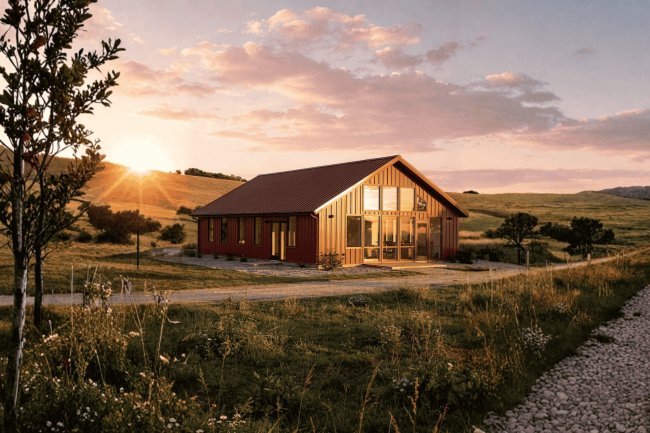
Orient the long axis east-west so the largest wall faces south. This supports passive solar performance, reduces summer heat gain, and works hand-in-hand with natural ventilation to improve comfort year-round.
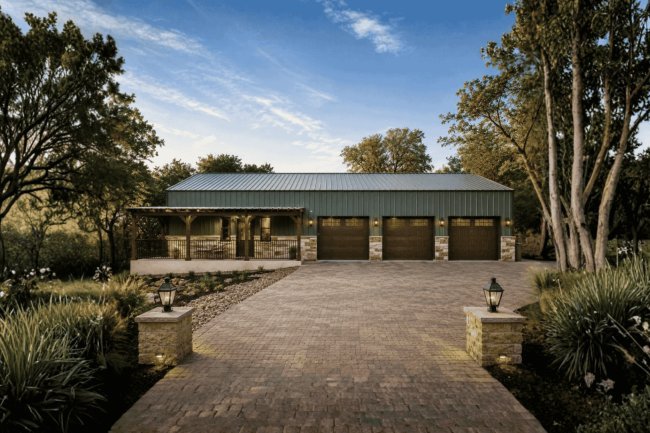
Covered porches and breezeways create thermal buffer zones that cool incoming air before it enters the home. They also provide shaded outdoor living areas while strengthening natural airflow pathways.
Barndo Plans Advantage: Barndo Plans offers a wide library of floor plans optimized for open-plan living, with many layouts already designed to support natural airflow and ventilation strategies that perform well across Southern and Midwestern U.S. climates.
Create open circulation paths that allow air to move naturally.
Align the structure to prevailing breezes and sunlight.
Use height differences and roof ventilation to remove heat.
Following this three-step approach at the design stage ensures natural ventilation is structurally embedded — not patched in after the fact. Each layer reinforces the others for year-round comfort.
Floor Plan Decisions That Support Airflow
Building Orientation
Porches & Breezeways
Three-Step Airflow Framework
Plan & Flow
Orient & Position
Stack & Exhaust
Natural ventilation is most powerful when it's designed in — not added on. The most effective barndo ventilation systems combine building orientation, strategic window placement, passive stack-effect design, and open floor plan layouts into a unified strategy.
Ridge vents, soffit vents, and cupolas passively remove trapped heat. These features align with classic barndominium aesthetics while delivering measurable comfort and energy-efficiency benefits.
Open great rooms, breezeways, and covered porches allow air to travel freely through the structure. Explore barndoplans.com for plans already designed with airflow and comfort in mind.
Natural ventilation is a design decision — and like all good design decisions, it pays dividends for the life of the building. Start with the right floor plan, and everything else follows.
Browse barndominium floor plans designed for comfort, efficiency, and natural airflow.
Choose layouts that support cross-ventilation, passive cooling, and year-round comfort.
Work with your land, climate, and lifestyle to create a naturally comfortable home.
Put It All Together: Design Smart from the Start
Add Passive Exhaust Features
Choose an Open Floor Plan
Explore Plans
Optimize Airflow
Build Smarter
What's Your Reaction?