Texas Barndominium Insurance Guide 2026: What You Need, What It Costs, and How to Avoid Costly Mistakes
Texas barndominium insurance guide 2026. Learn coverage options, costs, common mistakes, and how to avoid commercial classification.
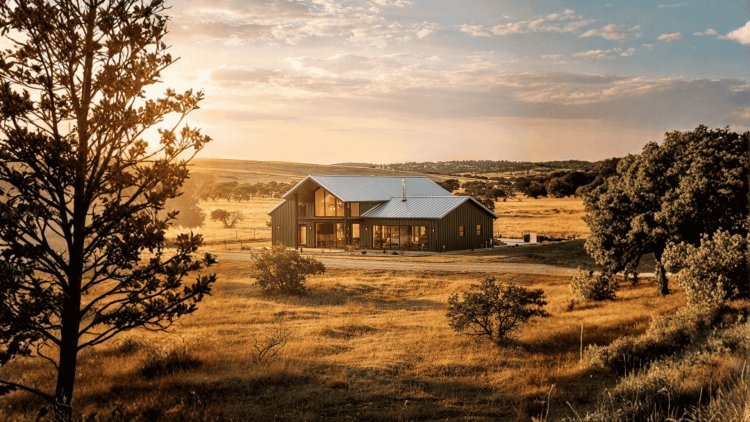
The core problem is classification. A barndominium blurs the line that insurance underwriting was designed for. Is it a house? A barn? A workshop with living quarters?
National insurance carriers with standardized underwriting systems often don't have a box for "metal building used as a primary residence with an attached shop." When the underwriter can't classify it confidently as a standard residential structure, they default to the classification with the most coverage: commercial.
Commercial rates on a residential structure are significantly higher than homeowners rates.
Additionally, the mixed-use nature of many barndominiums — a living area plus a working shop or storage space — can create genuine coverage gaps.
A standard homeowners policy may cover the living space but exclude damage to tools, equipment, or business property stored in the shop. Understanding what your policy actually covers matters more than the premium.
If your barndominium includes a shop space — and most Texas barndominiums do — be specific about what's in it. Tools, tractors, ATVs, hunting equipment, and business equipment stored in the shop may not be covered under standard homeowners policies.
Standard homeowners liability coverage, $100,000–$300,000, is often inadequate for rural properties where visitors — workers, family, hunting guests — are present on the acreage.
Consider umbrella liability coverage, $1M additional coverage for $200–$400/year, if you have any agricultural activity, guests, or employees on the property.
Statewide, agricultural-residential specialty, barndominium-experienced
Writes barndominium policies as dwelling/homeowners, not commercial
Agricultural and rural property specialty
Farm and ranch specialists with rural residential experience
Local independent agents who represent multiple carriers — can shop your barndominium to 5–10 carriers simultaneously and find the best classification and rate
"Do you classify this barndominium as a residential dwelling or a commercial structure for underwriting purposes?"
If the answer is commercial, find a different insurer. You're not operating a commercial enterprise — you're living in a home. You should be paying residential rates.
A Texas barndominium in a standard inland county, not coastal, not flood zone, insured correctly as a residential dwelling typically costs:
Coastal Texas and Gulf Coast counties add wind and hail coverage costs that can push total insurance to $5,000–$12,000+ per year. This is a recurring operating cost that should be factored into your total ownership cost analysis before building in coastal areas.
Texas wind and hail claims are significant. Metal buildings have a natural advantage in hail resistance compared to asphalt shingles — and many insurers give premium credits for standing seam metal roofing, which is more hail-resistant than exposed-fastener metal panels, and for Class 4 impact-resistant metal roofing rated under UL 2218.
Ask your insurer: "Do you give a premium discount for Class 4 impact-resistant metal roofing?" In Texas's active hail markets — DFW, Central Texas, West Texas — this discount can run $200–$500/year, and the roofing upgrade cost is recovered in 3–5 years of premium savings.
Coverage Type
Annual Premium Range
Notes
Dwelling, replacement cost, $300K structure
$1,800–$3,200/year
Replacement cost coverage on metal building. Rate varies by county and construction quality.
+ Personal property
$300–$600/year
Contents of the living space
+ Shop/equipment rider
$400–$1,200/year
Depends on equipment value. Tractors, tools, UTVs.
+ Umbrella liability, $1M
$200–$400/year
Strongly recommended for rural properties with visitors
+ Flood insurance, if in AE zone
$800–$3,500/year
Required with federally backed mortgage in AE zone
Total, non-flood-zone inland TX
$2,700–$5,400/year
Most Texas barndominium owners pay in this range
Have your homeowners insurance commitment in place before your final construction draw. Lenders require proof of insurance before releasing the final draw and converting the construction loan to a permanent mortgage.
Don't leave this to the last week of construction.
A professionally designed barndominium with permit-ready drawings, correct dimensions, and engineering stamps makes the insurance process straightforward. Our in-house engineers produce the documentation insurers need.
Browse 200+ Texas Plans →
What's Your Reaction?