Barndominium Permitting Guide
The Regulatory Reality Check
Before diving into state-specific nuances, it's essential to understand a foundational truth about barndominium permitting in the United States: there is no single federal standard. The regulatory landscape is fragmented, locally governed, and often inconsistent — even between neighboring counties.
!
Key Starting Point
Permitting Is Hyper-Local
Understanding this reality is the first step toward a successful permit application. What works in one county may not work in the next, even when the properties are only a few miles apart.
It's a Local Issue, Not a Federal One
Zoning classifications, building codes, and permitting requirements are decided almost entirely at the county and municipal level. Two parcels separated by a county line can face dramatically different regulatory environments.
Why State-Level Guidance Is Not Enough
Some rural counties have virtually no formal zoning apparatus, while adjacent urban-influenced counties operate under strict residential construction codes. Research must be hyper-local — state-level guidance is rarely sufficient on its own.
02
02
Classification Matters
The Golden Rule: You're Building a Home, Not a Barn
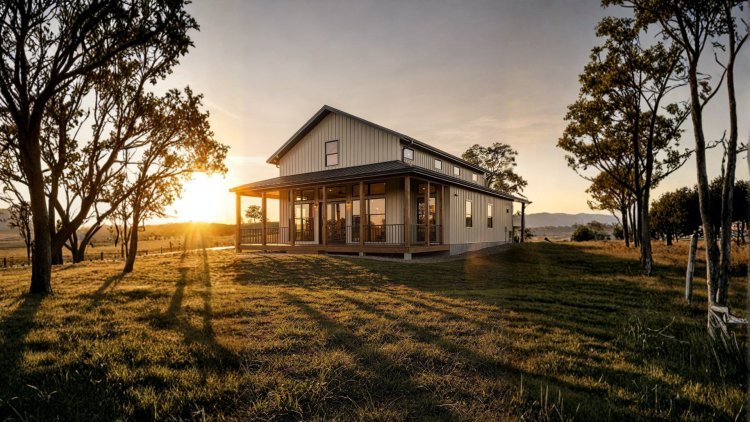
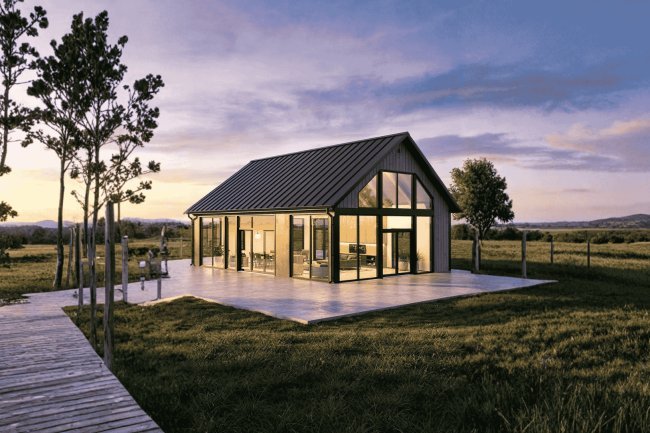
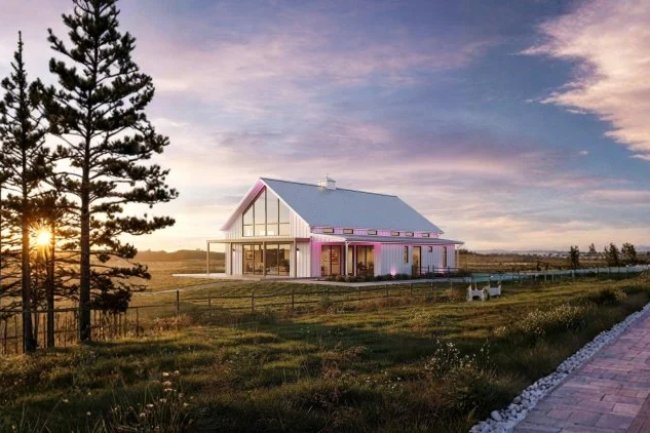
In the vast majority of jurisdictions, a barndominium is legally treated as a standard single-family residential structure — not an agricultural outbuilding. This distinction is critical.
Residential Code Path
When you submit plans that are classified as residential, your project is evaluated against the same residential building codes as any conventional stick-frame home.
Avoid the Wrong Label
The moment your plans are perceived as a “shop” or “barn,” you risk triggering agricultural-use scrutiny, which carries an entirely different and far more complex regulatory path.
Hidden Obstacles: HOAs and Extraterritorial Jurisdiction
Even in rural-friendly, low-regulation areas, two invisible barriers can derail your project entirely. HOA covenants — which are private legal agreements, not government regulations — can explicitly prohibit metal exteriors, non-traditional rooflines, or any structure that doesn't conform to neighborhood aesthetics.
ETJ Risk
Equally dangerous is Extraterritorial Jurisdiction, or ETJ: a legal zone extending 1 to 5 miles beyond city limits where municipalities can enforce urban building restrictions on unincorporated rural land.
Always verify whether your parcel sits within an ETJ boundary before purchasing land or committing to a barndominium plan.
!
Permit Strategy
Confirm the Rules Before You Commit
Before purchasing land, ordering plans, or signing with a builder, verify county requirements, municipal overlays, HOA rules, ETJ boundaries, and whether your project will be classified clearly as residential construction. This early research can prevent expensive redesigns, permit delays, or outright project denial.
Most Permitting-Friendly Regions
The Tier 1 Havens: Texas and the South
For barndominium builders seeking the path of least regulatory resistance, the American South — and Texas in particular — consistently ranks as the most favorable region in the country. A combination of rural culture, property rights traditions, and lean government infrastructure creates an environment where post-frame residential construction faces fewer bureaucratic hurdles than virtually anywhere else in the nation.
TX
Texas: The Gold Standard
Texas remains the undisputed leader in barndominium-friendly permitting. Hundreds of rural counties operate with no formal zoning ordinances whatsoever, meaning your build is governed primarily by setback requirements and septic regulations rather than restrictive land-use classifications.
Owner-Builder Advantage
Adding to this advantage, Texas has no statewide contractor licensing requirement, making owner-builder projects significantly more accessible.
Popular Rural Counties
Counties like Erath, Bosque, and McCulloch have become popular destinations precisely because of their minimal regulatory footprint.
Minimal Zoning
Rural-Friendly
Owner-Builder Access
Verify County Rules
That said, always verify county-level rules — the landscape varies considerably even within the Lone Star State.
TN
02
Strong Secondary Market
Tennessee and the Cumberland Plateau
Tennessee has emerged as a strong secondary market for barndominium construction, particularly across the Cumberland Plateau and rural Middle Tennessee.
Why It Works
The state benefits from high permit success rates for owner-builders, a strong tradition of agricultural construction, and county-level permitting offices that are generally familiar with post-frame residential projects.
Counties such as Van Buren, White, and Putnam offer particularly favorable conditions, combining scenic rural land with manageable regulatory requirements.
Tennessee's relatively low cost of land and construction further amplifies its appeal for first-time barndo builders.
The ETJ Cautionary Note
Even in the most permitting-friendly southern states, proximity to cities is a critical variable. Texas law, for example, allows municipalities to extend Extraterritorial Jurisdiction up to 5 miles beyond city limits depending on population size.
Why ETJ Matters
Within these ETJ zones, cities can enforce subdivision regulations, aesthetic standards, and building codes that mirror urban requirements — effectively neutralizing the regulatory advantages of rural land.
Before purchasing property in any southern state, confirm the parcel's distance from the nearest incorporated municipality and verify whether any ETJ overlay applies.
A parcel that appears rural on a map may be subject to surprisingly stringent urban-influenced codes.
!
Regional Strategy
Friendly Region Does Not Mean Automatic Approval
Texas and parts of the South offer some of the most favorable conditions for barndominium construction, but every parcel still requires local verification. County rules, septic requirements, setbacks, ETJ overlays, and proximity to municipalities can all change the permitting path.
Barndominium Engineering Requirements
The Engineering Gatekeepers
Across all 50 states, one of the most consistently underestimated aspects of the barndominium permitting process is the structural engineering requirement. Unlike conventional wood-frame construction, which building inspectors evaluate against well-established prescriptive codes, steel and post-frame systems operate in a grayer technical zone — one that almost universally demands professionally stamped, engineered drawings before a permit will be issued.
PE
Why Engineered Plans Are Non-Negotiable
Wood-frame residential construction benefits from decades of prescriptive building codes — inspectors can verify compliance without engineering calculations. Steel and post-frame systems do not enjoy the same standardized code treatment.
Stamped Structural Drawings
Most jurisdictions will require a licensed structural engineer to stamp your plans, certifying that the building will withstand local environmental loads.
Typical Engineering Budget
Expect to budget $2,000–$8,000 for engineering fees depending on project complexity, building size, and your state's requirements.
Not Optional
This is not optional — it is the gateway to permit approval in virtually every jurisdiction that enforces a building code.
02
02
Load Engineering
The Three Critical Load Variables
Wind Load Capacity
Florida, the Gulf Coast, and coastal Carolinas require engineering that meets or exceeds hurricane-force wind resistance standards, often with continuous load path documentation from foundation to roof.
Snow Load Requirements
Northern states and mountainous regions require snow load calculations. Roof pitch, purlin spacing, and column sizing must be engineered to handle accumulated snow weight safely.
Seismic Stability
California, the Pacific Northwest, and portions of the New Madrid Seismic Zone require seismic load analysis integrated into structural plans.
Classification Must Be Residential
Submitting plans that visually resemble a “shop,” “pole barn,” or agricultural outbuilding — even if labeled as residential — can trigger agricultural-use scrutiny from local inspectors.
Critical Permitting Trap
This classification shift invites a completely different and more burdensome review pathway. Always present your submission with residential language and residential-style drawings.
Make Residential Intent Obvious
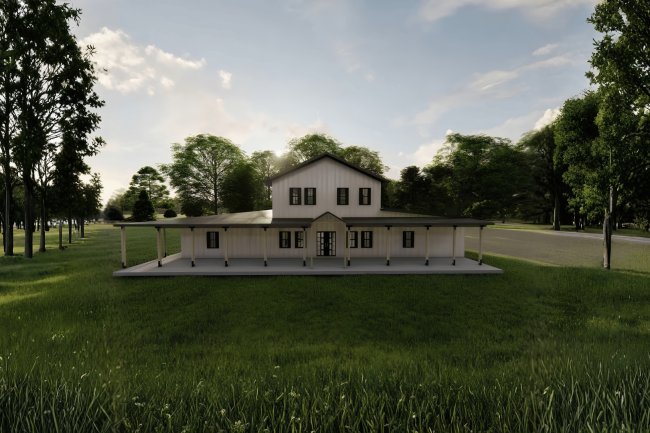
Clearly labeled living spaces, kitchens, bathrooms, bedroom suites, and architectural elevations that communicate “home” help avoid unnecessary agricultural-use review.
High-Bar Permitting States
Florida and The High-Bar States
While the American South broadly trends toward barndominium-friendly permitting, Florida stands as a notable exception — and understanding why can help builders in similarly regulated states avoid costly missteps. Florida's unique combination of hurricane exposure, flood risk, and aggressive statewide building code enforcement creates one of the most demanding permitting environments in the country for post-frame and metal construction.
FL
01
Statewide Code Challenge
The Florida 9th Edition Challenge
Florida's 9th Edition Florida Building Code is among the most comprehensive and strictly enforced residential construction standards in the United States. Unlike most states that adopt modified versions of the International Building Code with local amendments, Florida has developed its own unified statewide code — one that applies uniformly across all 67 counties.
What This Means for Barndos
Barndominium builders should expect mandatory statewide engineered plans, strict wind and flood mitigation requirements, and inspections that leave little room for deviation from approved drawings.
Budget Reality
Budget more time and money for plan review in Florida than in virtually any other state.
02
The “Metal Box” Aesthetic Restriction
Beyond structural requirements, many Florida jurisdictions — and an increasing number of municipalities in states like Georgia, North Carolina, and Colorado — enforce architectural overlay standards that govern the exterior appearance of residential structures.
Common Design Requirements
These regulations may require traditional cladding materials such as brick, fiber cement, or stucco on street-facing elevations, specific roof pitch minimums, and architectural articulation such as gable accents, window trim, or porch elements.
Design Review Risk
A barndominium that passes structural review may still be denied a permit — or require significant redesign — based purely on how it looks from the street.
Engage with your local planning department on aesthetic standards before finalizing your exterior design.
The Silent Killers: Setbacks, Drainage & Lot Coverage
Experienced barndominium builders and permit consultants consistently identify three “silent killers” as the primary causes of permit denial — not structural issues, not aesthetic violations, but site-level compliance failures that could have been identified months earlier.
Setbacks
Setback requirements define minimum distances from property lines, roads, and bodies of water — and rural parcels often carry agricultural setbacks that differ from residential ones.
Drainage & Stormwater
Drainage and stormwater regulations may require engineered drainage plans, retention ponds, or impervious surface calculations.
Lot Coverage
Lot coverage maximums restrict the percentage of a parcel that can be covered by structures and impervious surfaces.
!
High-Bar State Strategy
Verify Site Rules Before Finalizing the Design
In Florida and similarly regulated states, structural engineering is only part of the challenge. Aesthetic overlays, setbacks, drainage requirements, stormwater controls, and lot coverage limits can all reshape your project. Verify all three early — ideally before land purchase — to ensure your planned footprint is viable.
Strategic Action Plan
Your Path to Approval
Success in the barndominium permitting process is rarely the result of luck — it is the product of methodical preparation, strategic presentation, and proactive engagement with local authorities. The builders who achieve smooth approvals are those who treat the permitting process as a project unto itself, with its own research phase, documentation phase, and submission strategy.
01
01
Research First
Verify Your Zoning Category First
Before any design work, engineering investment, or land purchase, confirm the exact zoning classification of your target parcel. Contact the county planning or zoning office directly and ask whether the parcel permits detached residential occupancy as a primary dwelling.
Ask These Questions
Does this parcel permit detached residential occupancy as a primary dwelling? Does it fall within any overlay district, ETJ boundary, or HOA covenant area?
Obtain written confirmation where possible. Online zoning maps are frequently outdated — always verify with the primary source.
This single step can prevent tens of thousands of dollars in sunk costs on non-viable land.
02
02
Submission Language
Standardize Your Submission Language
Present your project consistently and unambiguously as a Residential Dwelling — never as a “barndominium,” “pole barn home,” “shop-house,” or “metal building.” These informal terms carry agricultural and industrial connotations that can trigger unnecessary scrutiny.
Use Residential Terminology
Your permit application, engineering drawings, and correspondence should use terms such as living area, kitchen, primary bedroom suite, bathroom, and mechanical room.
Make the Home Use Obvious
Ensure your floor plan clearly labels all habitable spaces and that your elevations look architecturally residential.
The language you use shapes the classification your project receives.
03
03
Early Engagement
Pre-Consult Before You Commit
The single highest-leverage action any prospective barndominium builder can take is a pre-application consultation with the local county planning department — ideally before signing a land purchase agreement.
What to Bring
Bring a rough site plan, your proposed building footprint, and specific questions about engineering requirements, aesthetic standards, and post-frame residential construction issues.
Why This Matters
A 30-minute meeting can reshape your entire design and submission strategy — and dramatically improve your odds of approval.
Most counties offer this service at no cost or minimal fee, giving you access to the staff who will review your future permit application.
!
Key Takeaway
Treat Permitting as a Design Constraint
The most successful barndominium projects share a common thread: their builders treated permitting as a design constraint to engineer around, not a bureaucratic obstacle to push through. Know your jurisdiction, speak its language, and engage early. The result is a faster approval, a smoother build, and a home that will carry a clear title and full certificate of occupancy for decades to come.
✓
Quick Reference Checklist
Before You Submit
Confirm parcel zoning permits primary residential occupancy.
Check for HOA covenants and ETJ boundary overlap.
Budget for stamped, engineered structural drawings.
Research local wind, snow, and seismic load requirements.
Verify setback, drainage, and lot coverage limits.
Label all plans as “Residential Dwelling” throughout.
Schedule a pre-application meeting with county planning.
Consult a local permit expediter if facing a complex jurisdiction.