How to Create Seamless Indoor- Outdoor Living Spaces in Your Barndominium
Create seamless indoor-outdoor barndominium living with smart floor plans, patios, doors, and design ideas for comfort and year-round enjoyment.
Why Indoor-Outdoor Flow Matters in Barndominium Design
Most homeowners who choose barndominiums are drawn to the wide-open feel — high ceilings, large footprints, and a connection to the surrounding landscape. But that connection doesn't happen automatically. It must be intentionally designed into the floor plan from the very beginning.
Poor transitions between indoor and outdoor spaces are one of the most common homeowner regrets after construction. A poorly positioned patio door or a living room facing away from the best views can quietly diminish the experience of a home that took years to plan and build.
Why Barndominiums Have an Advantage
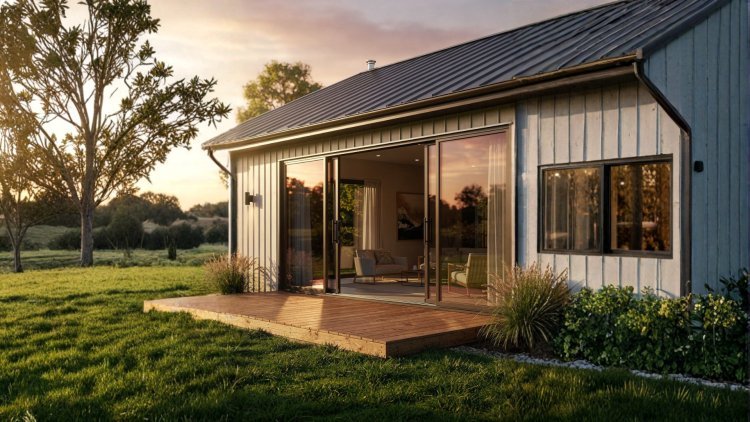
Post-frame construction allows for large uninterrupted wall openings, making oversized sliding doors, folding glass walls, and expansive window systems structurally achievable without expensive engineering compromises.
Achieving a seamless indoor-outdoor connection requires multiple design decisions working together. These three elements create the biggest impact when planning or customizing a barndominium.
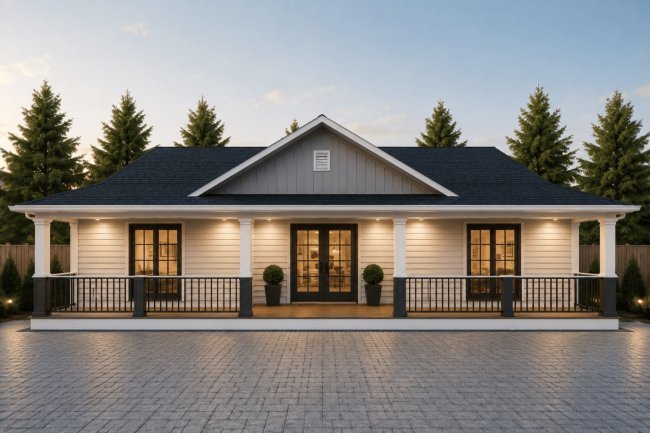
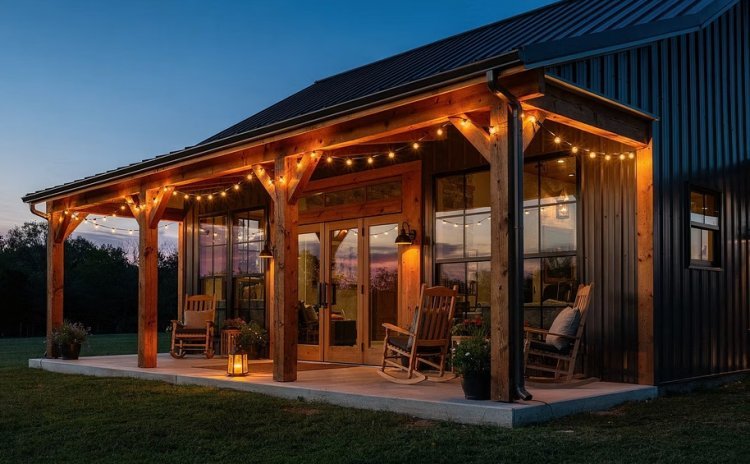
Deep porches, breezeways, and roof extensions create protected transition zones that function like additional living rooms. In many U.S. climates, these spaces remain comfortable for much of the year.
Using matching or visually similar materials across thresholds creates an uninterrupted visual plane. Stained concrete, large-format tile, and coordinated decking help indoor and outdoor areas feel like one cohesive space.
Design Elements That Make It Work
Covered Outdoor Living Areas
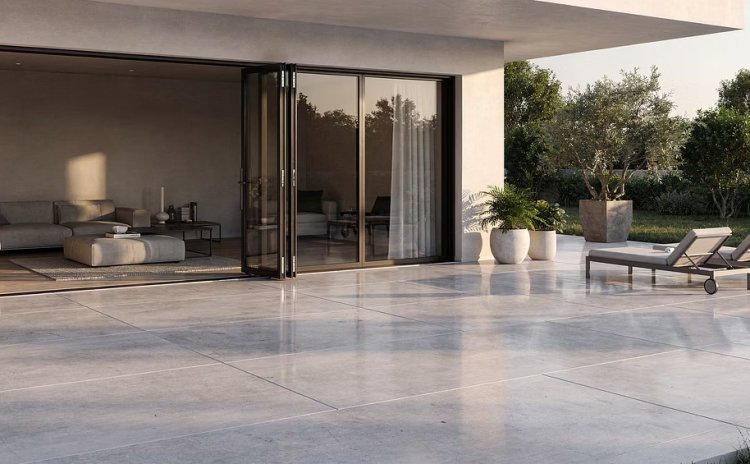
Continuous Flooring Materials
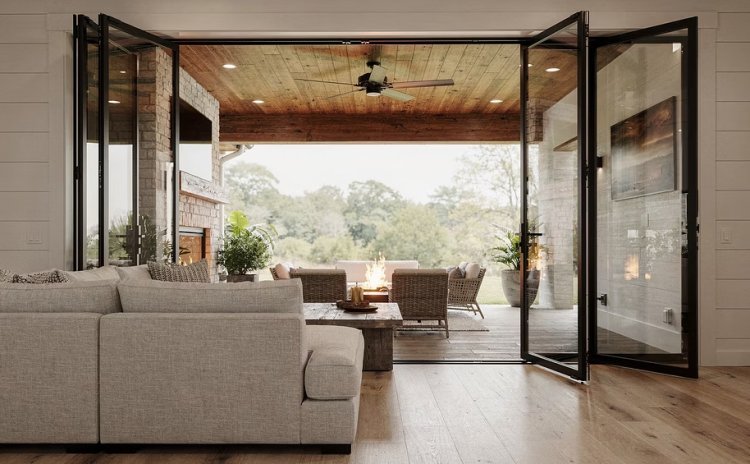
Think of your outdoor space as a series of functional rooms. A well-designed barndominium site plan intentionally connects these zones to the home's interior layout, creating a seamless indoor-outdoor living experience.
Locate this gathering area approximately 15–20 feet from the home for safety and atmosphere. Maintaining sightlines from the great room or primary suite strengthens the visual connection between indoors and outdoors.
Planning Tip: Many Barndo Plans floor plans already incorporate covered porches, open rear elevations, and great-room orientations that naturally support indoor-outdoor living. Reviewing floor plans with your lot orientation and lifestyle priorities in mind is one of the best ways to create a seamless connection between your home and the surrounding land.
Planning Your Outdoor Zones
Relaxation & Fire Pit Zone
Creating seamless indoor-outdoor living isn't about expensive upgrades — it's about making the right decisions during the floor plan stage. Follow this practical roadmap to maximize livability, views, and long-term enjoyment.
Prioritize layouts where the great room, kitchen, and dining area connect directly to outdoor living spaces. Avoid designs where bedrooms or utility rooms interrupt visual connections to patios, porches, or scenic views.
Decide on sliding glass walls, oversized doors, and large window systems before structural plans are finalized. Wide openings are one of the biggest advantages of post-frame construction, but they must be planned during design rather than added later.
"The best barndominiums don't just sit on the land — they engage with it."
Explore professionally designed barndominium floor plans built for seamless indoor-outdoor living. Find layouts that match your land, your lifestyle, and your long-term vision before construction begins.
Bringing It All Together: Your Action Plan
Choose a Floor Plan Built for Flow
Spec Your Openings Early
Ready to Find the Right Plan?
What's Your Reaction?